- Cheese is not a low calorie food, because cheddar holds about 403 calories per 100 grams with about 33 grams of fat, and no food, including cheese, melts fat on its own.
- Cheese can still help weight loss, because it is rich in protein, and about 25 grams of protein per 100 grams keeps hunger away for hours, so people eat less at the next meal.
- The right portion is 1 ounce a day of hard cheese, about 113 calories, or half a cup of cottage cheese, about 110 calories, and a large block every day can quietly add about 1,000 calories a week.
- The best use is as a flavor, not as a main dish, because cheese instead of butter or cream sauce saves calories while adding protein and calcium, and that swap is where the benefit lives.
Is Cheese Good for Weight Loss And What It Actually Does
When people ask is cheese good for weight loss, the honest answer is that cheese is not a low calorie food, but it is a weight loss friendly food when the portion stays near 1 ounce a day. One hundred grams of cheddar holds about 403 calories with about 33 grams of fat, which is more calories than chicken breast and far more than Greek yogurt, and that number surprises everyone who thinks of cheese as a light diet food. No honest post should claim that cheese burns fat, because no study shows that, and the idea that cheese melts belly fat is a myth that sells diet plans, not results.
Cheese works through protein, not through magic. One hundred grams of cheddar carries about 25 grams of protein, and protein is the nutrient that does the real work of weight loss, because it digests slowly, steadies blood sugar, protects muscle while fat is lost, and keeps the stomach full for hours. A person who eats 1 ounce of cheese with an apple is a person who does not reach for cookies at 9 in the evening, and that missing cookie is worth far more than the 113 calories the cheese cost. The saving is not in the cheese itself, it is in the cookie that never happens, and that is the honest way cheese helps weight loss.
The second reason is calcium, and it deserves an honest line, because cheese is one of the richest sources of calcium in the United States diet. One hundred grams of cheddar carries about 720 milligrams of calcium, which is close to three quarters of the daily target for many adults, and calcium supports bones, teeth, and muscle function. Calcium does not cause weight loss, and no honest post should claim that it does, but a body with strong bones moves more easily, and that movement is what the scale actually measures. The honest way to describe cheese is that it is a rich food with real nutrients, not a miracle food, and the nutrients are never a reason to eat a huge block every day.
The third reason is satisfaction, and it works through flavor rather than through fullness. Cheese tastes rich and salty, and a rich food that feels complete stops a craving, while a plain food that feels like punishment starts a search for something filling. That is why cheese belongs in a weight loss plan as a flavor, not as a main dish, because a flavor needs only 1 ounce, while a main dish is an extra that adds calories without adding satisfaction. A person who enjoys a meal is a person who keeps eating that meal, and a meal habit that survives is worth far more than a perfect meal that lasts three days.
Cheese Nutrition In The United States
To judge cheese fairly, start with the numbers, because the gap between what people think cheese costs and what it actually costs is the whole story of this post. One hundred grams of cheddar holds about 403 calories, about 33 grams of fat, about 25 grams of protein, about 720 milligrams of calcium, and about 620 milligrams of sodium, with almost zero carbs and almost zero sugar. One hundred grams of mozzarella holds about 280 calories with about 22 grams of fat and about 22 grams of protein, which is lighter than cheddar, because mozzarella carries more water and less fat. One hundred grams of feta holds about 264 calories with about 21 grams of fat and about 14 grams of protein, which is lighter than cheddar, because feta is crumbly and a little goes a long way. One ounce of cheddar holds about 113 calories with about 7 grams of protein, while half a cup of cottage cheese holds about 110 calories with about 14 grams of protein, so the size of the serving changes the cost by hundreds of calories, which is worth knowing when the plan is tight.
The protein number is the one that matters most, because 25 grams of protein in 100 grams of cheddar is close to half of the daily target for many adults, and protein is the nutrient that protects muscle while fat is lost. A person who eats 1 ounce of cheese a day is already covering a real part of the daily protein need with a food that also brings calcium, and that combination is why cheese is one of the most used proteins in the United States. A person who eats cheese instead of butter gets the same richness with protein and calcium, and that swap is the whole reason cheese earns its place in this series.
The sodium number is the one people worry about most, and it deserves an honest answer. One hundred grams of cheddar carries about 620 milligrams of sodium, which is about a quarter of the daily limit for many adults, and sodium holds water in the body, so a salty cheese can make the scale jump by a pound overnight. That jump is water, not fat, and it passes in a day or two, but a person who eats cheese every day should drink water and watch the salt in the rest of the day. A person who eats 1 ounce of cheese has nothing to worry about, and a person who eats a whole block should worry, because the salt and the calories both add up fast.
The calcium number is a small extra worth one honest line. One hundred grams of cheddar carries about 720 milligrams of calcium, which is one of the richest amounts in any food, and calcium supports bones, teeth, and muscle function. That amount is a real benefit, but it is not a reason to eat a huge block, because 1 ounce gives the same calcium with far fewer calories, and the calcium is never a reason to eat more of it. The honest way to describe cheese is that it is a rich food with real nutrients, not a miracle food, and the nutrients are never a reason to eat more of it.
Why Cheese Can Fit A Weight Loss Plan
Protein is the first reason cheese earns its place in a weight loss plan, because a food that keeps hunger away for hours is worth more than a food that saves calories for one hour. One hundred grams of cheddar carries about 25 grams of protein, and protein digests slowly, steadies blood sugar, protects muscle while fat is lost, and keeps the stomach full for hours. A person who eats 1 ounce of cheese with an apple is a person who does not reach for cookies at 9 in the evening, and that missing cookie can save 150 to 250 calories, which is far more than the 113 calories the cheese cost. The saving is not in the cheese itself, it is in the cookie that never happens, and that is the honest way cheese helps weight loss.
Calcium is the second reason, and it works through health rather than through fullness. One hundred grams of cheddar carries about 720 milligrams of calcium, which is close to three quarters of the daily target for many adults, and calcium supports bones, teeth, and muscle function. Calcium does not cause weight loss, and no honest post should claim that it does, but a body with strong bones moves more easily, and that movement is what the scale actually measures. A person who eats 1 ounce of cheese a day is a person who gets a nutrient that chicken and eggs cannot give in the same amount, and that nutrient is worth the extra calories when the portion stays small.
Satisfaction is the third reason, and it works through flavor rather than through fullness. Cheese tastes rich and salty, and a rich food that feels complete stops a craving, while a plain food that feels like punishment starts a search for something filling. That is why cheese belongs in a weight loss plan as a flavor, because a flavor needs only 1 ounce, while a main dish is an extra that adds calories without adding satisfaction. A person who enjoys a meal is a person who keeps eating that meal, and a meal habit that survives is worth far more than a perfect meal that lasts three days.
Replacing butter and cream is the fourth reason, and it is the most practical one in the United States. Most people do not eat cheese on its own, they eat it instead of butter or cream sauce, and that swap is where the benefit lives. One tablespoon of butter holds about 100 calories with zero protein, while 1 ounce of cheese holds about 113 calories with about 7 grams of protein, so the calories are close but the protein is far better. A person who replaces butter with cheese saves nothing in calories but gains protein and calcium, because the cheese still tastes rich. A person who adds cheese on top of butter saves nothing, because the cheese is an extra, not a swap.
How Much Cheese To Eat Each Day
One ounce a day of hard cheese is the right target for most people, and 1 ounce of cheddar means about 113 calories with about 7 grams of protein, which fits easily into a weight loss plan as a snack or a flavor. That amount is enough to make a meal feel rich and complete, and it is small enough that the calories never matter. One ounce a day is also the amount that keeps the sodium near 170 milligrams, which is a small part of the daily limit, so this post and that limit agree with each other.
Half a cup of cottage cheese a day can also work for people who love cheese and want a bigger portion, because half a cup of cottage cheese means about 110 calories with about 14 grams of protein, which is almost the same calories as 1 ounce of cheddar with twice the protein. A bigger portion of cottage cheese is fine for most people, because it is the lightest cheese in this whole series, and it fills the stomach in a way that hard cheese never does. A whole block of cheddar a day is the upper limit for a weight loss plan, because a whole block holds about 1,100 calories, and that is a lot of calories for a single food, even a tasty one. The fix is to cut the cheese into 1 ounce pieces once, because a piece is a portion while a block is a temptation, and a measured piece is the only piece that stays honest.
The best time for cheese is in the afternoon, because 1 ounce of cheese with an apple gives the afternoon a full stomach to work with, and a full stomach is what keeps the 4 o clock vending machine away. Cheese at lunch is also fine in a small amount, because a sandwich with 1 ounce of cheese makes a lunch that holds until dinner, and that holding power is exactly what lunch is for. Cheese at breakfast is common in the United States, because an omelet with 1 ounce of cheese is a real option, because it carries protein and calcium in a small portion. The time of day matters far less than the portion, because 1 ounce helps at any meal while a whole block hurts at every meal.
Low fat cheese is the portion to watch, because a low fat cheddar is a choice that many people forget. One ounce of low fat cheddar holds about 80 calories with about 7 grams of protein, which is almost the same protein as full fat cheddar with about 30 fewer calories, and it costs about the same per pound. A low fat cheese sandwich costs about 80 calories for the cheese, while a full fat cheese sandwich costs about 113 calories, and the gap between the two is the whole story. The fix is to use low fat cheese at home twice a week, because a low fat slice costs less than a full fat slice while tasting almost the same.
Cottage Cheese The Lightest Cheese For Weight Loss
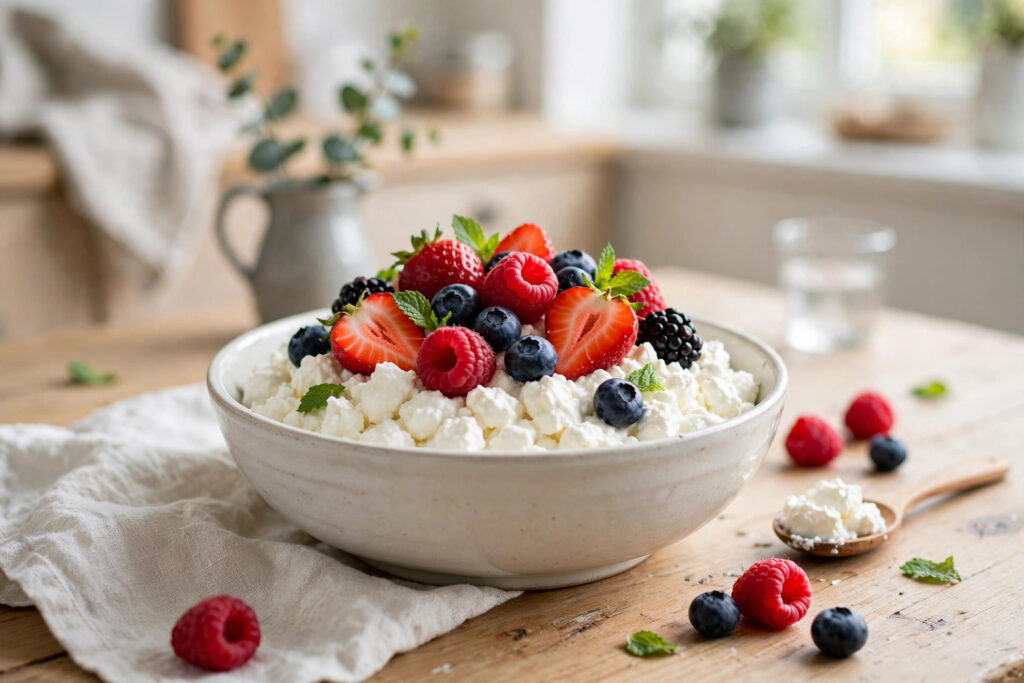
Cottage cheese is the lightest cheese in this whole series, and it deserves its own section, because it is the cheese that actually fits a weight loss plan in a normal portion. One hundred grams of low fat cottage cheese holds about 98 calories with about 11 grams of protein and about 4 grams of fat, which is less than a quarter of the calories in cheddar for almost half the protein. Half a cup of cottage cheese holds about 110 calories with about 14 grams of protein, which is almost the same calories as 1 ounce of cheddar with twice the protein, and that protein is what keeps hunger away for hours. A person who eats cottage cheese for breakfast is a person who does not reach for a pastry at 10 in the morning, and that missing pastry is worth far more than the 110 calories the cottage cheese cost.
Cottage cheese works through casein, and it deserves an honest line, because casein is the slow protein in milk. Casein digests very slowly, which means it keeps the stomach full for longer than any other cheese, and a food that keeps hunger away for hours is worth more than a food that saves calories for one hour. A person who eats cottage cheese before bed is a person who sleeps without hunger, and that quiet sleep is exactly what a weight loss plan needs. Cottage cheese does not burn fat, and no honest post should claim that it does, but a food that fills the stomach for 110 calories is a food that earns its place in this series.
The best ways to eat cottage cheese are simple, because cottage cheese is a plain food that needs a partner. Half a cup of cottage cheese with berries costs about 140 calories with about 15 grams of protein, and it works as a real breakfast rather than a snack. Half a cup of cottage cheese on whole grain toast costs about 200 calories with about 16 grams of protein, and it works as a real lunch rather than a snack. Half a cup of cottage cheese with cucumber and tomatoes costs about 130 calories with about 14 grams of protein, and it works as a real dinner side rather than a snack. Use half a cup for each one, because a full cup doubles the calories without doubling the fullness, and half a cup is enough when the partner is fresh.
Cottage cheese is also the cheapest cheese for weight loss in the United States, because a 16 ounce tub costs about 3 to 4 dollars and gives about 4 servings of half a cup, so each serving costs about 75 cents to 1 dollar. A block of cheddar costs about 5 to 6 dollars per pound and gives about 16 servings of 1 ounce, so each serving costs about 30 to 40 cents, which is cheaper per serving, but cottage cheese gives twice the protein per serving for the same calories. Either cheese works for weight loss, as long as the portion stays near 1 ounce of hard cheese or half a cup of cottage cheese, the sauce stays light, and the cheese replaces butter or cream instead of joining them.
7 Ways To Use Cheese For Weight Loss
- The cottage cheese breakfast bowl. Spoon half a cup of cottage cheese over berries and oats, and the bowl gains a creamy sweet flavor with about 200 calories in total. Add a drizzle of honey, and the bowl reaches about 220 calories with protein and fiber, which is a full breakfast that holds until lunch. Use half a cup for this one, because a full cup turns a healthy breakfast into a 300 calorie meal before the day even ends.
- The mozzarella salad. Tear 1 ounce of mozzarella over a bowl of tomatoes, cucumber, and basil, and the salad gains a soft rich flavor with about 120 calories in total. The combination is one of the freshest lunches in this whole series, because it carries about 7 grams of protein with about 2 grams of fiber in a single bowl, and it holds hunger for hours in a way that a plain salad never does. Use 1 ounce for this one, because 3 ounces in a salad doubles the calories without doubling the fullness, and 1 ounce is enough when the salad is big.
- The feta vegetables. Crumble 1 ounce of feta over roasted zucchini, bell peppers, and green beans, and the plate gains a salty rich flavor with about 150 calories in total. The combination carries about 5 grams of protein with about 4 grams of fiber, so it works as a real dinner side rather than a snack. Use 1 ounce for this one, because 3 ounces on vegetables turns a light side into a heavy one, and a heavy side is a sleepy evening.
- The cheese omelet. Whisk two eggs with 1 ounce of cheddar and spinach, and the plate gains a rich savory flavor with about 250 calories in total. The combination is one of the most filling breakfasts in this whole series, with about 20 grams of protein and about 1 gram of fiber in a single plate, and it holds hunger for hours in a way that plain toast never does. Use 1 ounce for this one, because 3 ounces in an omelet doubles the calories without doubling the protein, and 1 ounce is enough when the eggs are fresh.
- The cheese and apple snack. Pair 1 ounce of cheddar with a sliced apple, and the plate gains a sweet salty flavor with about 200 calories in total. The combination carries about 8 grams of protein with about 4 grams of fiber, so it works as a real afternoon snack rather than a dessert. Use 1 ounce for this one, because 3 ounces with an apple turns a light snack into a heavy one, and a heavy snack is a sleepy afternoon.
- The light grilled cheese. Grill 1 ounce of low fat cheddar on whole grain bread with tomato, and the sandwich gains a warm rich flavor with about 220 calories in total. The combination is one of the simplest lunches in this whole series, because it needs one pan and 10 minutes, and a lunch that is easy is a lunch that happens. Use 1 ounce for this one, because a large block in a sandwich doubles the calories without doubling the fullness, and 1 ounce is enough when the bread is whole grain.
- The cheese tacos. Fill two small corn tortillas with 1 ounce of cheese, beans, and salsa, and the plate gains a fresh spicy flavor with about 300 calories in total. The combination carries about 12 grams of protein with about 6 grams of fiber, so it works as a real dinner rather than a snack. Use 1 ounce for this one, because 3 ounces in tacos turns a healthy dinner into a heavy one, and a heavy dinner is a sleepy evening.
Mistakes That Turn Cheese Into A Weight Gain Food
The mistakes below are the reason the answer to is cheese good for weight loss changes from yes to no in real life, because the portion counts calories, not good intentions, and the gap between the two is where most plans fail. The first mistake is the whole block habit, and it is the most common one in the United States. A whole block of cheddar holds about 1,100 calories, and a person who eats it while watching television can finish it without noticing. The fix is to cut the cheese into 1 ounce pieces once and put the rest away, because a piece is a portion while a block is a temptation, and a measured piece is the only piece that stays honest.
The second mistake is cheese as an extra, because a person who adds cheese on top of pizza, pasta, or a burger saves nothing. Cheese on a pizza that already has a crust and sauce is an extra 113 calories per ounce on a meal that was already heavy, and an extra is an extra no matter how tasty it is. The fix is to use cheese instead of a sauce, because 1 ounce of cheese instead of butter or cream saves saturated fat while adding protein, and a swap is the only use that helps weight loss.
The third mistake is processed cheese, because a processed cheese slice can carry 80 to 100 calories with oil and salt, and a person who eats it with crackers has eaten a salty snack without noticing. Processed cheese is a cheese product that happens to contain cheese, not a real cheese dinner, and the word cheese on the packet does not change the calories in the oil. The fix is to use real cheddar or mozzarella instead, because a real cheese costs about 113 calories per ounce with real protein, while a processed slice costs almost the same with less protein, and the real version tastes almost the same.
The fourth mistake is cheese sauce, because a cheese sauce on pasta or nachos can add 200 to 300 calories without noticing. The cheese itself is fine at about 113 calories per ounce, but the sauce beside it turns a healthy dinner into a heavy one, and a heavy dinner is a sleepy evening. The fix is to use a small amount of grated cheese instead of a sauce, because grated cheese adds flavor without adding cream, and a dish that tastes fresh with grated cheese is a dish that protects the plan.
The fifth mistake is expecting cheese to work alone. A daily ounce of cheese changes nothing when the rest of the day is fast food, sweet drinks, and no movement, because fat loss comes from the total day, not from a single food. Cheese is a support player, and it only helps when food, sleep, and walking are already close to right. The people who get results from it are the ones who use it to replace butter and cream, not the ones who buy it hoping it will fix a whole diet.
Cheese Compared With Other Foods
Greek yogurt is the closest rival to cheese, and the comparison is honest rather than one sided. One hundred grams of Greek yogurt holds about 59 calories with about 10 grams of protein and about 0.4 grams of fat, while 100 grams of cheddar holds about 403 calories with about 25 grams of protein and about 33 grams of fat. Greek yogurt wins on calories, because it gives protein for far fewer calories, while cheese wins on flavor, because it tastes richer than any yogurt. For weight loss, Greek yogurt is the better daily pick by the numbers, while cheese is the better pick when only cheese will do, and the best plan uses both.
Eggs are the second comparison, and it is the one where eggs win on calories. One large egg holds about 72 calories with about 6 grams of protein and about 5 grams of fat, while 1 ounce of cheddar holds about 113 calories with about 7 grams of protein and about 9 grams of fat. Eggs give almost the same protein for far fewer calories, which makes them the lighter protein for weight loss by the numbers. Cheese wins on calcium, because it carries far more calcium than eggs, while eggs win on price, and the best plan uses eggs on normal days and cheese on the days when only cheese will do.
Chicken breast is the third comparison, and it is the one where chicken wins clearly on calories. One hundred grams of chicken breast holds about 165 calories with about 31 grams of protein and about 3.6 grams of fat, while 100 grams of cheddar holds about 403 calories with about 25 grams of protein and about 33 grams of fat. Chicken gives more protein for less than half the calories, which makes it the best protein for weight loss by the numbers. Cheese wins on calcium and on flavor, because it carries calcium that chicken never has and tastes richer than any chicken, while chicken wins on lightness, and the best plan uses chicken when the goal is the lightest protein and cheese when the goal is the richest flavor.
Peanut butter is the fourth comparison, and it is the one where cheese wins clearly. One hundred grams of peanut butter holds about 588 calories with about 25 grams of protein and about 50 grams of fat, while 100 grams of cheddar holds about 403 calories with about 25 grams of protein and about 33 grams of fat. The protein is the same, but the calories are far lower in cheese, because peanut butter is mostly fat while cheese is protein and fat in balance. For weight loss, cheese is the better pick in almost every case, and peanut butter is the better pick only when a recipe needs a flavor that cheese cannot give.
Tofu is the last comparison, and it is the easiest one to settle. One hundred grams of tofu holds about 76 calories with about 8 grams of protein and about 5 grams of fat, while 100 grams of cheddar holds about 403 calories with about 25 grams of protein and about 33 grams of fat. Tofu gives far fewer calories for a smaller amount of protein, which makes it the lightest protein for weight loss by the numbers. Cheese wins on protein and on calcium, because it carries far more of both, while tofu wins on lightness. Tofu is the better pick when the goal is the lightest protein, while cheese is the better pick when the goal is the richest meal.
How To Buy Cheese In The United States
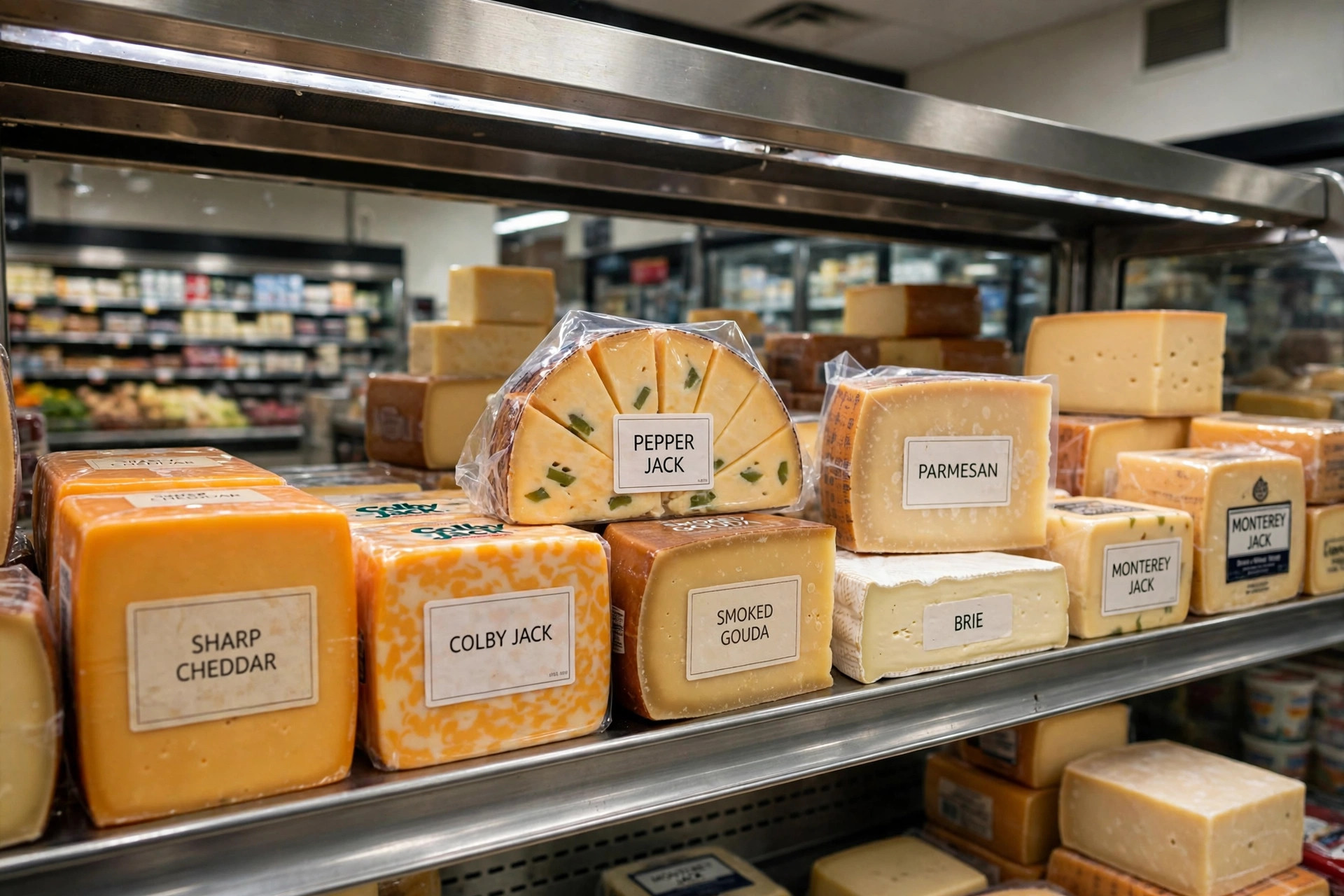
The label check is the whole skill, and it takes less than a minute once the pattern is known. First, check the ingredients, and a real cheese lists milk, salt, and cultures, while a processed cheese lists oil, whey, and emulsifiers, and a short list is a sign of a real cheese. Second, check the fat, and a full fat cheddar holds about 33 grams of fat per 100 grams, while a low fat cheddar holds about 20 grams of fat per 100 grams, and a lower fat is a sign of a lighter cheese. Third, check the price, and a fair price for cheddar in the United States is about 5 to 6 dollars per pound, while a cheap block is often processed or low quality.
Fresh versus aged is the second check, and it deserves an honest answer. Aged cheddar is the richer pick for flavor, because it tastes stronger, and a stronger taste means a smaller amount is enough, so aged cheese is the better pick for weight loss by flavor. Fresh mozzarella is the lighter pick for calories, because it holds about 280 calories per 100 grams with more water, and a lighter cheese is the better pick for a bigger portion. For weight loss, aged cheese and fresh cheese are both fine, because the calories are close in a 1 ounce serving, and the flavor is what decides how much is enough.
Cottage cheese is the last check, and it is the best value in this whole post. A 16 ounce tub of cottage cheese costs about 3 to 4 dollars and holds about 4 servings of half a cup, which is about 75 cents to 1 dollar per serving, and it keeps in the fridge for 1 to 2 weeks after opening. Buy cottage cheese with no added fruit and no added sugar when possible, because fruit adds sugar and sugar adds calories, and a plain tub gives the most protein for the fewest calories. Either cheese works for weight loss, as long as the portion stays near 1 ounce of hard cheese or half a cup of cottage cheese, the sauce stays light, and the cheese replaces butter or cream instead of joining them.
FAQs
Is cheese good for weight loss?
Cheese is not a low calorie food, but it can help weight loss when the portion stays small, because 1 ounce of cheddar carries about 113 calories with about 7 grams of protein, and that combination keeps hunger away for hours. A whole block every day can slow fat loss, so the right amount is 1 ounce a day of hard cheese or half a cup of cottage cheese, used as a swap for butter or cream, not as an extra on top of them. Cheese does not burn fat, and no food does, so the benefit is only the protein and the swap, not any magic in the cheese.
How much cheese can I eat a day to lose weight?
One ounce a day of hard cheese is the right target for most people, and 1 ounce of cheddar means about 113 calories with about 7 grams of protein, which fits easily into a weight loss plan as a snack or a flavor. Half a cup of cottage cheese a day can also work for people who love cheese and want a bigger portion, because half a cup means about 110 calories with about 14 grams of protein. A whole block of cheddar a day is the upper limit, because it holds about 1,100 calories, and that is a lot of calories for a single food, even a tasty one.
Is cottage cheese good for weight loss?
Cottage cheese is the best cheese for weight loss, because 100 grams of low fat cottage cheese holds about 98 calories with about 11 grams of protein and about 4 grams of fat, which is less than a quarter of the calories in cheddar for almost half the protein. Half a cup of cottage cheese holds about 110 calories with about 14 grams of protein, and its slow casein protein keeps the stomach full for longer than any other cheese. A person who eats cottage cheese for breakfast is a person who does not reach for a pastry at 10 in the morning, and that missing pastry is worth far more than the 110 calories the cottage cheese cost.
Is mozzarella better than cheddar for weight loss?
Mozzarella is slightly better than cheddar for weight loss, because 100 grams of mozzarella holds about 280 calories with about 22 grams of fat and about 22 grams of protein, while 100 grams of cheddar holds about 403 calories with about 33 grams of fat and about 25 grams of protein. Mozzarella gives fewer calories for almost the same protein, because it carries more water and less fat. Cheddar wins on flavor, because it tastes stronger than mozzarella, and a stronger taste means a smaller amount is enough, so the best plan uses mozzarella for a bigger portion and cheddar for a stronger flavor.
Does cheese cause weight gain?
Cheese causes weight gain only when the portion is too big, because 1 ounce of cheddar carries about 113 calories, while a whole block carries about 1,100 calories, and the gap between the two is where most plans fail. Cheese on pizza, pasta, or nachos as an extra adds calories without adding fullness, and an extra is an extra no matter how tasty it is. A daily ounce of cheese changes nothing when the rest of the day is fast food, sweet drinks, and no movement, because fat loss comes from the total day, not from a single food.
Conclusion
So the honest answer to is cheese good for weight loss is that cheese is not a low calorie food, but it is a weight loss friendly food when the portion stays near 1 ounce a day of hard cheese or half a cup of cottage cheese. Cheese gives protein and calcium for about 113 calories per ounce, which is enough to keep hunger away for hours and to turn a plain meal into a meal that feels complete, and it replaces butter and cream with a richer swap that adds protein. It is not a fat burner, and a whole block every day will slow fat loss, but it does not need to be, because a food that makes a smaller daily calorie total easy to hold is exactly what weight loss needs.
Start tomorrow with 1 ounce of cheese with an apple instead of a cookie, and judge it by the hunger at 9 in the evening rather than by the scale in the morning. If the evening feels calm and the cookie never happens, the cheese is doing its job, and it will keep doing it for as long as the portion stays small and the cheese replaces butter or cream. That is the whole secret of cheese, because it is not a trick food, it is a rich food with a high satisfaction value that fits real life, and real life is where weight loss is actually won.