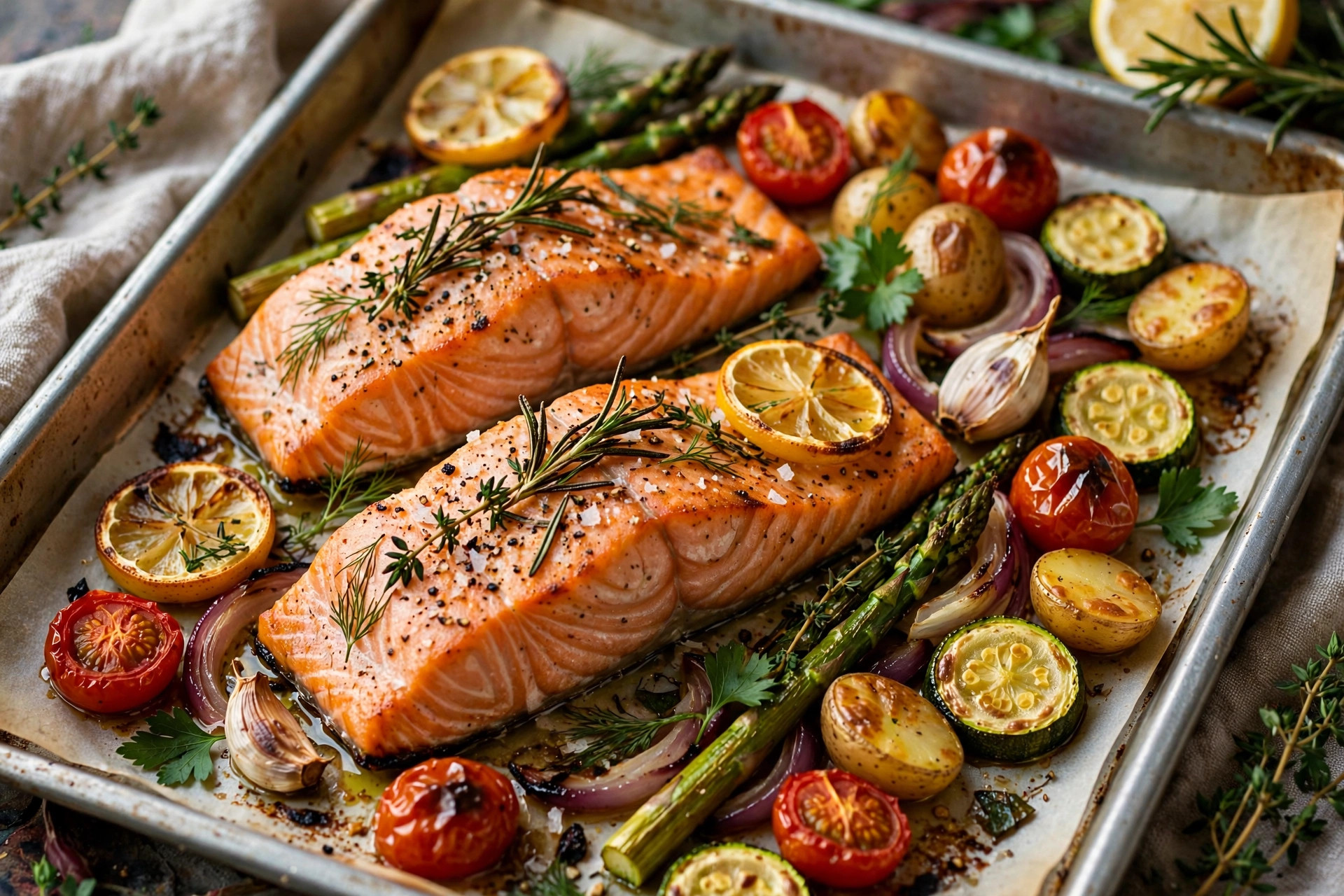
- Salmon is not a low calorie food, because Atlantic salmon holds about 206 calories per 100 grams with about 13 grams of fat, and no food, including salmon, melts fat on its own.
- Salmon can still help weight loss, because it is rich in protein, and about 22 grams of protein per 100 grams keeps hunger away for hours, so people eat less at the next meal.
- The right portion is 4 to 6 ounces two to three times a week, about 175 to 260 calories per serving, and a large fillet every day can quietly add about 1,500 calories a week.
- The best use is as a swap, not as an extra, because salmon instead of beef or fried chicken saves calories while adding omega-3, and that swap is where the benefit lives.
Is Salmon Good for Weight Loss And What It Actually Does
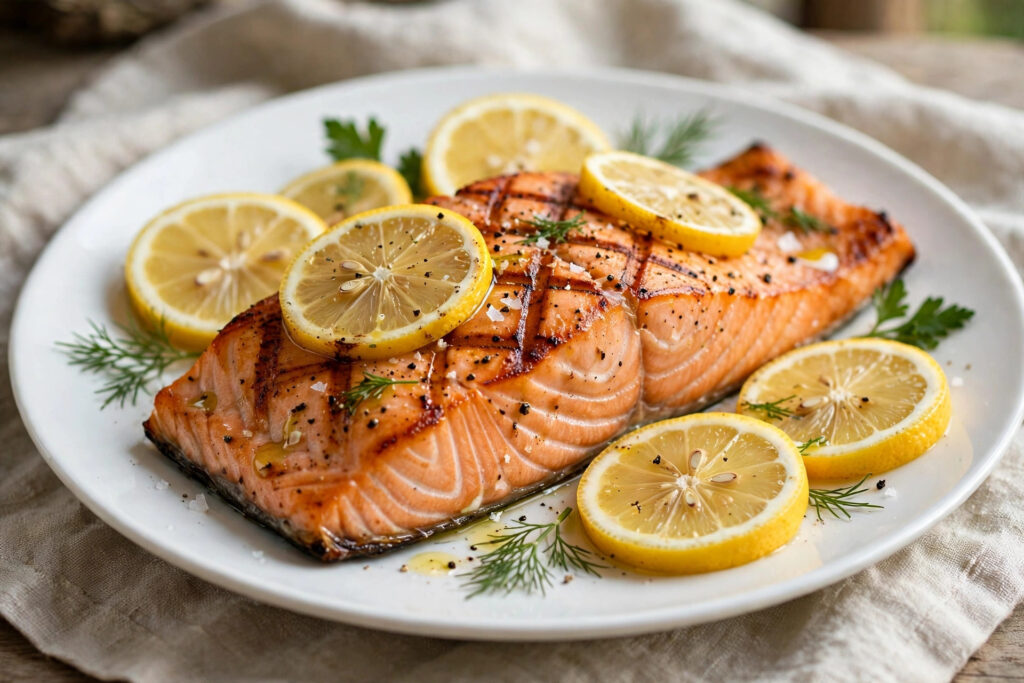
When people ask is salmon good for weight loss, the honest answer is that salmon is not a low calorie food, but it is a weight loss friendly food when the portion stays near 4 to 6 ounces. Atlantic salmon holds about 206 calories per 100 grams with about 13 grams of fat, which is more calories than chicken breast and far more than cod, and that number surprises everyone who thinks of salmon as a light diet food. No honest post should claim that salmon burns fat, because no study shows that, and the idea that salmon melts belly fat is a myth that sells fish oil, not results.
Salmon works through protein, not through magic. One hundred grams of salmon carries about 22 grams of protein, and protein is the nutrient that does the real work of weight loss, because it digests slowly, steadies blood sugar, protects muscle while fat is lost, and keeps the stomach full for hours. A person who eats 4 ounces of salmon at dinner is a person who does not reach for dessert at 9 in the evening, and that missing dessert is worth far more than the 230 calories the salmon cost. The saving is not in the salmon itself, it is in the dessert that never happens, and that is the honest way salmon helps weight loss.
The second reason is omega-3, and it deserves an honest line, because omega-3 is the nutrient salmon is famous for. One hundred grams of salmon carries about 1.8 grams of omega-3 fats, mainly EPA and DHA, which support heart health and brain health in ways that no other common protein does. Omega-3 does not cause weight loss, and no honest post should claim that it does, but a body with healthy fats and steady energy is a body that moves more and craves less, and that movement is what the scale actually measures. The honest way to describe salmon is that it is a rich food with real nutrients, not a miracle food, and the nutrients are never a reason to eat a huge fillet every day.
The third reason is satisfaction, and it works through flavor rather than through fullness. Salmon tastes rich and buttery, and a rich meal that feels complete stops a craving, while a plain meal that feels like punishment starts a search for something filling. That is why salmon belongs in a weight loss plan as a main dish, not as a side, because a main dish needs only 4 to 6 ounces, while a side dish is an extra that adds calories without adding satisfaction. A person who enjoys dinner is a person who keeps eating dinner, and a dinner habit that survives is worth far more than a perfect dinner that lasts three days.
Salmon Nutrition In The United States
To judge salmon fairly, start with the numbers, because the gap between what people think salmon costs and what it actually costs is the whole story of this post. One hundred grams of Atlantic salmon holds about 206 calories, about 22 grams of protein, about 13 grams of fat, about 1.8 grams of omega-3, about 490 milligrams of potassium, and about 570 IU of vitamin D, with zero carbs and zero sugar. One hundred grams of wild sockeye salmon holds about 182 calories with about 25 grams of protein and about 8 grams of fat, which is lighter than farmed salmon, because wild salmon swims more and eats less fat. A 4 ounce serving of Atlantic salmon holds about 230 calories, while a 6 ounce serving holds about 350 calories, so the size of the fillet changes the cost by about 120 calories, which is worth knowing when the plan is tight.
The protein number is the one that matters most, because 22 grams of protein in 100 grams of fish is close to a third of the daily target for many adults, and protein is the nutrient that protects muscle while fat is lost. A person who eats salmon twice a week is already covering a large part of the weekly protein need with a food that also brings omega-3, and that combination is why salmon is one of the most recommended proteins in the United States. A person who eats salmon instead of beef gets the same fullness with less saturated fat, and that swap is the whole reason salmon earns its place in this series.
The vitamin D number is a small extra worth one honest line. One hundred grams of salmon carries about 570 IU of vitamin D, which is one of the richest amounts in any food, and vitamin D supports bones, mood, and the immune system. That amount is a real benefit, but it is not a reason to eat a huge fillet, because a smaller fillet gives the same vitamin D with fewer calories, and the vitamin D is never a reason to eat more of it. The honest way to describe salmon is that it is a rich food with real nutrients, not a miracle food, and the nutrients are never a reason to eat more of it.
The mercury number is the one people worry about most, and it deserves an honest answer. Salmon is one of the lowest mercury fish in the sea, because it is a short lived fish that eats small prey, and the United States Food and Drug Administration lists salmon as a best choice fish. The guidance is 8 to 12 ounces of seafood per week for adults, which means two to three salmon meals a week fits easily inside the safe range. A person who eats salmon twice a week has nothing to worry about, and a person who eats it every day should mix in other proteins, because variety is safer than any single fish, even a safe one.
Why Salmon Can Fit A Weight Loss Plan
Protein is the first reason salmon earns its place in a weight loss plan, because a food that keeps hunger away for hours is worth more than a food that saves calories for one hour. One hundred grams of salmon carries about 22 grams of protein, and protein digests slowly, steadies blood sugar, protects muscle while fat is lost, and keeps the stomach full for hours. A person who eats 4 ounces of salmon at dinner is a person who does not reach for dessert at 9 in the evening, and that missing dessert can save 250 to 350 calories, which is far more than the 230 calories the salmon cost. The saving is not in the salmon itself, it is in the dessert that never happens, and that is the honest way salmon helps weight loss.
Omega-3 is the second reason, and it works through health rather than through fullness. One hundred grams of salmon carries about 1.8 grams of omega-3 fats, mainly EPA and DHA, which support heart health and brain health in ways that no other common protein does. Omega-3 does not cause weight loss, and no honest post should claim that it does, but a body with healthy fats and steady energy is a body that moves more and craves less, and that movement is what the scale actually measures. A person who eats salmon twice a week is a person who gets a nutrient that chicken and beef cannot give, and that nutrient is worth the extra calories when the portion stays small.
Satisfaction is the third reason, and it works through flavor rather than through fullness. Salmon tastes rich and buttery, and a rich meal that feels complete stops a craving, while a plain meal that feels like punishment starts a search for something filling. That is why salmon belongs in a weight loss plan as a main dish, because a main dish needs only 4 to 6 ounces, while a side dish is an extra that adds calories without adding satisfaction. A person who enjoys dinner is a person who keeps eating dinner, and a dinner habit that survives is worth far more than a perfect dinner that lasts three days.
Replacing red meat is the fourth reason, and it is the most practical one in the United States. Most people do not eat salmon on its own, they eat it instead of beef or fried chicken, and that swap is where the benefit lives. One hundred grams of ground beef holds about 176 calories with about 10 grams of saturated fat, while 100 grams of salmon holds about 206 calories with about 3 grams of saturated fat, so the calories are close but the fat is far better. A person who replaces a steak with salmon saves saturated fat without feeling deprived, because the salmon still tastes rich. A person who adds salmon on top of a steak saves nothing, because the salmon is an extra, not a swap.
How Much Salmon To Eat Each Day
Four to six ounces two to three times a week is the right target for most people, and 4 ounces of Atlantic salmon means about 230 calories with about 25 grams of protein and about 1.8 grams of omega-3, which fits easily into a weight loss plan as a dinner main dish. That amount is enough to make a meal feel rich and complete, and it is small enough that the calories never matter. Two salmon meals a week is also the amount that fits the United States guidance, which is 8 to 12 ounces of seafood per week for adults, so this post and that guidance agree with each other.
One salmon meal a day can also work for people who love fish and eat it in small portions, because 4 ounces a day means about 230 calories with about 25 grams of protein, which is still fine for most people, but the second fish meal should replace another protein rather than sit on top of it. A large fillet every day is the upper limit for a weight loss plan, because a 8 ounce fillet holds about 470 calories, and that is a lot of calories for a single fish, even a healthy one. The fix is to weigh the fillet once, because a restaurant fillet can easily pass 8 ounces without noticing, and a weighed fillet is the only fillet that stays honest.
The best time for salmon is at dinner, because 4 ounces of salmon with vegetables gives the evening a full stomach to work with, and a full stomach is what keeps the 9 o clock dessert away. Salmon at lunch is also fine in a small amount, because a salmon salad with greens makes a lunch that holds until dinner, and that holding power is exactly what lunch is for. Salmon at breakfast is rare in the United States, but smoked salmon on toast with an egg is a real option, because it carries protein and omega-3 in a small portion. The time of day matters far less than the portion, because 4 ounces helps at any meal while 8 ounces hurts at every meal.
Canned salmon is the portion to watch, because a can of salmon is a budget option that many people forget. One can of salmon holds about 200 calories with about 22 grams of protein, which is almost the same as fresh salmon, and it costs far less per serving. A salmon patty made from canned salmon with egg and oats costs about 250 calories, while a restaurant salmon fillet with butter sauce can cost 500 calories, and the gap between the two is the whole story. The fix is to use canned salmon at home twice a week, because a home patty costs half of a restaurant fillet while tasting almost the same.
7 Ways To Use Salmon For Weight Loss
- The grilled lemon salmon. Grill a 4 ounce salmon fillet with lemon and herbs, and the plate gains a fresh rich flavor with about 230 calories in total. Add steamed broccoli and a small baked potato, and the plate reaches about 400 calories with protein, fiber, and omega-3, which is a full dinner that holds until morning. Use 4 ounces for this one, because an 8 ounce fillet turns a healthy dinner into a 500 calorie meal before the day even ends.
- The baked herb salmon. Bake a 4 ounce salmon fillet with garlic, dill, and olive oil spray, and the plate gains a soft rich flavor with about 240 calories in total. The combination is one of the simplest dinners in this whole series, because it needs one tray and 15 minutes, and a dinner that is easy is a dinner that happens. Use 4 ounces for this one, because a large fillet in the oven doubles the calories without doubling the fullness, and 4 ounces is enough when vegetables fill the plate.
- The salmon salad. Flake 4 ounces of cooked salmon over a bowl of spinach, tomatoes, cucumber, and olives, and the salad gains a rich protein with about 230 extra calories. The combination is one of the most filling lunches in this whole series, with about 30 grams of protein and about 6 grams of fiber in a single bowl, and it holds hunger for hours in a way that a plain salad never does. Use 4 ounces for this one, because 8 ounces in a salad doubles the calories without doubling the fullness, and 4 ounces is enough when the salad is big.
- The salmon patties. Mix one can of salmon with one egg and oats, form two small patties, and pan fry them with spray oil, and the plate gains a crispy protein with about 250 calories in total. The combination carries about 25 grams of protein with about 3 grams of fiber, so it works as a real dinner rather than a snack. Use one can for this one, because two cans of salmon turns a light dinner into a heavy one, and a heavy dinner is a sleepy evening.
- The salmon tacos. Fill two small corn tortillas with 4 ounces of grilled salmon, cabbage, and salsa, and the plate gains a fresh spicy flavor with about 350 calories in total. The combination carries about 28 grams of protein with about 5 grams of fiber, so it works as a real dinner rather than a snack. Use 4 ounces for this one, because 8 ounces in tacos turns a healthy dinner into a heavy one, and a heavy dinner is a sleepy evening.
- The salmon with vegetables. Roast a 4 ounce salmon fillet with zucchini, bell peppers, and green beans on one tray, and the plate gains a colorful rich flavor with about 300 calories in total. The combination is one of the easiest dinners in this whole series, because it needs one tray and 20 minutes, and a dinner that is easy is a dinner that happens. Use 4 ounces for this one, because a large fillet on the tray doubles the calories without doubling the vegetables, and 4 ounces is enough when the tray is full.
- The canned salmon sandwich. Mash canned salmon with lemon and yogurt, spread it on whole grain bread with lettuce, and the sandwich gains a fresh creamy flavor with about 300 calories in total. The combination carries about 28 grams of protein with about 5 grams of fiber, so it works as a real lunch rather than a snack. Use one can for this one, because two cans in a sandwich turns a healthy lunch into a heavy one, and a heavy lunch is a sleepy afternoon.
Mistakes That Turn Salmon Into A Weight Gain Food
The mistakes below are the reason the answer to is salmon good for weight loss changes from yes to no in real life, because the portion counts calories, not good intentions, and the gap between the two is where most plans fail. The first mistake is the large fillet habit, and it is the most common one in the United States. A restaurant fillet can easily pass 8 ounces, and 8 ounces of salmon holds about 470 calories, which is close to a full meal on its own. The fix is to eat 4 to 6 ounces and save the rest for tomorrow, because a saved fillet is a free fillet for the next day, and a weighed fillet is the only fillet that stays honest.
The second mistake is the creamy sauce, because a salmon fillet with butter sauce, cream sauce, or cheese can add 200 to 300 calories without noticing. The salmon itself is fine at about 230 calories per 4 ounces, but the sauce beside it turns a healthy dinner into a heavy one, and a heavy dinner is a sleepy evening. The fix is to use lemon, herbs, and mustard instead of butter and cream, because lemon and herbs add flavor without adding fat, and a fillet that tastes fresh with lemon is a fillet that protects the plan.
The third mistake is fried salmon, because a breaded and fried salmon fillet can carry 400 to 500 calories with oil and batter, and a person who eats it with fries has eaten a fast food meal without noticing. Fried salmon is a fried food that happens to contain salmon, not a healthy salmon dinner, and the word salmon on the menu does not change the calories in the batter. The fix is to grill or bake the salmon instead, because a grilled fillet costs about 230 calories while a fried fillet costs more than twice as much, and the grilled version tastes almost the same.
The fourth mistake is salmon as an extra, because a person who adds salmon on top of a steak, a pasta, or a creamy dish saves nothing. Salmon on a pasta that already has cream sauce is an extra 230 calories on a meal that was already heavy, and an extra is an extra no matter how healthy it is. The fix is to use salmon instead of a meat, because 4 ounces of salmon instead of beef saves saturated fat while adding omega-3, and a swap is the only use that helps weight loss.
The fifth mistake is expecting salmon to work alone. A daily salmon fillet changes nothing when the rest of the day is fast food, sweet drinks, and no movement, because fat loss comes from the total day, not from a single fish. Salmon is a support player, and it only helps when food, sleep, and walking are already close to right. The people who get results from it are the ones who use it to replace beef and fried chicken, not the ones who buy it hoping it will fix a whole diet.
Salmon Compared With Other Proteins
Chicken breast is the closest rival to salmon, and the comparison is honest rather than one sided. One hundred grams of chicken breast holds about 165 calories with about 31 grams of protein and about 3.6 grams of fat, while 100 grams of salmon holds about 206 calories with about 22 grams of protein and about 13 grams of fat. Chicken wins on calories and protein, because it gives more protein for fewer calories, while salmon wins on omega-3, because it carries about 1.8 grams that chicken never has. For weight loss, chicken is the better daily pick by the numbers, while salmon is the better twice a week pick by nutrients, and the best plan uses both.
Tuna is the second comparison, and it is the one where tuna wins on calories. One hundred grams of canned tuna in water holds about 116 calories with about 26 grams of protein and about 1 gram of fat, while 100 grams of salmon holds about 206 calories with about 22 grams of protein and about 13 grams of fat. Tuna gives more protein for far fewer calories, which makes it the lightest fish for weight loss by the numbers. Salmon wins on omega-3 and on taste, because it carries far more omega-3 and tastes richer than tuna, while tuna wins on price, and the best plan uses tuna on normal days and salmon on the days when only salmon will do.
Cod is the third comparison, and it is the one where cod wins clearly on calories. One hundred grams of cod holds about 82 calories with about 18 grams of protein and about 1 gram of fat, while 100 grams of salmon holds about 206 calories with about 22 grams of protein and about 13 grams of fat. Cod gives almost the same protein for less than half the calories, which makes it the best white fish for weight loss by the numbers. Salmon wins on omega-3 and on flavor, because it carries omega-3 that cod never has and tastes richer than any white fish, while cod wins on lightness, and the best plan uses cod when the goal is the lightest fish and salmon when the goal is the richest fish.
Beef is the fourth comparison, and it is the one where salmon wins clearly. One hundred grams of ground beef at 90 percent lean holds about 176 calories with about 20 grams of protein and about 10 grams of saturated fat, while 100 grams of salmon holds about 206 calories with about 22 grams of protein and about 3 grams of saturated fat. The calories are close, but the fat is different, because beef is mostly saturated fat while salmon is mostly omega-3 and monounsaturated fat, and the omega-3 in salmon is a benefit that beef can never match. For weight loss, salmon is the better pick in almost every case, and beef is the better pick only when a recipe needs a flavor that salmon cannot give.
Shrimp is the last comparison, and it is the easiest one to settle. One hundred grams of shrimp holds about 85 calories with about 20 grams of protein and about 1 gram of fat, while 100 grams of salmon holds about 206 calories with about 22 grams of protein and about 13 grams of fat. Shrimp gives almost the same protein for less than half the calories, which makes it the lightest seafood for weight loss by the numbers. Salmon wins on omega-3 and on fullness, because it carries omega-3 that shrimp never has and feels like a real meal in a way that a small portion of shrimp never does. Shrimp is the better pick when the goal is the lightest protein, while salmon is the better pick when the goal is the richest meal.
How To Buy Salmon In The United States
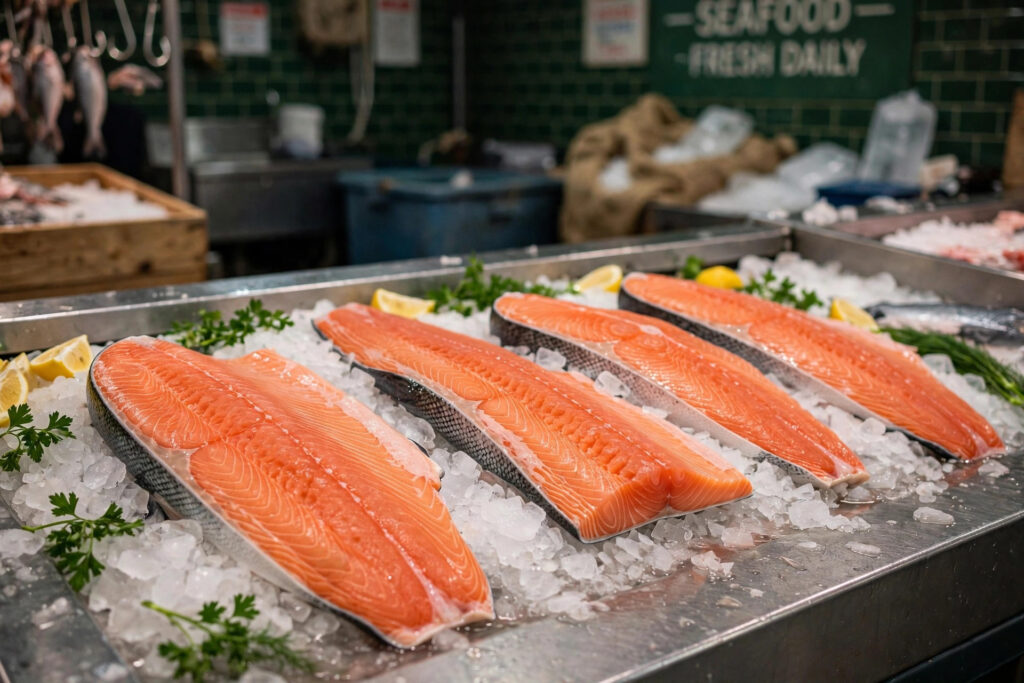
The wild versus farmed check is the whole skill, and it takes less than a minute once the pattern is known. First, check the label, and wild salmon costs more per pound but carries fewer calories and more omega-3 per bite, while farmed salmon costs less and tastes richer because it carries more fat. Second, check the color, and wild salmon looks deep red to orange, while farmed salmon looks pale pink to orange, and a very pale fillet is a sign of low quality. Third, check the price, and a fair price for fresh salmon in the United States is about 10 to 15 dollars per pound for farmed and about 15 to 25 dollars per pound for wild, while a cheap fillet is often old or low quality.
Fresh versus frozen is the second check, and it deserves an honest answer. Frozen salmon is often fresher than fresh salmon, because it is frozen within hours of the catch, while fresh salmon may have spent days in transport. For weight loss, fresh salmon and frozen salmon are almost the same, because the calories and the protein are the same in both, and the omega-3 survives freezing well. Frozen salmon is the better pick for price and for meal prep, because it keeps for months and thaws in a bowl of cold water in 30 minutes, while fresh salmon is the better pick for a same day dinner.
Canned salmon is the last check, and it is the best value in this whole post. A can of salmon costs about 3 to 5 dollars and holds about 200 calories with about 22 grams of protein, which is almost the same as fresh salmon, and it keeps for years on the shelf. Buy canned salmon with no added oil and no added salt when possible, because oil adds calories and salt adds water weight, and a can with bones gives extra calcium as a bonus. Either salmon works for weight loss, as long as the portion stays near 4 to 6 ounces, the sauce stays light, and the salmon replaces a meat instead of joining it.
FAQs
Is salmon good for weight loss?
Salmon is not a low calorie food, but it can help weight loss when the portion stays small, because 4 ounces of salmon carries about 230 calories with about 25 grams of protein and about 1.8 grams of omega-3, and that combination keeps hunger away for hours. A large fillet every day can slow fat loss, so the right amount is 4 to 6 ounces two to three times a week, used as a swap for beef or fried chicken, not as an extra on top of them. Salmon does not burn fat, and no food does, so the benefit is only the protein and the swap, not any magic in the fish.
How much salmon can I eat a day to lose weight?
Four to six ounces two to three times a week is the right target for most people, and 4 ounces of Atlantic salmon means about 230 calories with about 25 grams of protein, which fits easily into a weight loss plan as a dinner main dish. One salmon meal a day can also work for people who love fish and eat it in small portions, but the second fish meal should replace another protein rather than sit on top of it. A large 8 ounce fillet every day is the upper limit, because it holds about 470 calories, and that is a lot of calories for a single fish, even a healthy one.
Is wild salmon better than farmed salmon for weight loss?
Wild salmon is slightly better for weight loss, because 100 grams of wild sockeye salmon holds about 182 calories with about 25 grams of protein and about 8 grams of fat, while 100 grams of farmed Atlantic salmon holds about 206 calories with about 22 grams of protein and about 13 grams of fat. Wild salmon also carries more omega-3 per bite, because it eats a natural diet in the sea. Farmed salmon is still a good choice, because it costs less and tastes richer, and the best plan uses wild salmon when the price is fair and farmed salmon when the budget is tight.
Is canned salmon good for weight loss?
Canned salmon can be good for weight loss, because one can holds about 200 calories with about 22 grams of protein, which is almost the same as fresh salmon, and it costs far less per serving. A salmon patty made from canned salmon with egg and oats costs about 250 calories, while a restaurant salmon fillet with butter sauce can cost 500 calories. Buy canned salmon with no added oil and no added salt when possible, because oil adds calories and salt adds water weight, and a can with bones gives extra calcium as a bonus.
Does salmon burn belly fat?
No, salmon does not burn belly fat, because no food burns fat, and the idea that salmon melts belly fat is a myth that sells fish oil, not results. Salmon can help belly fat loss only in the honest way, because protein keeps hunger away for hours, so people eat less at the next meal, and eating less over weeks is what shrinks belly fat. A daily salmon fillet changes nothing when the rest of the day is fast food, sweet drinks, and no movement, because fat loss comes from the total day, not from a single fish.
Conclusion
So the honest answer to is salmon good for weight loss is that salmon is not a low calorie food, but it is a weight loss friendly food when the portion stays near 4 to 6 ounces two to three times a week. Salmon gives protein and omega-3 for about 230 calories per 4 ounces, which is enough to keep hunger away for hours and to turn a plain dinner into a meal that feels complete, and it replaces beef and fried chicken with a smaller richer swap that adds omega-3. It is not a fat burner, and a large fillet every day will slow fat loss, but it does not need to be, because a food that makes a smaller daily calorie total easy to hold is exactly what weight loss needs.
Start tomorrow with 4 ounces of grilled salmon with lemon and vegetables instead of a steak, and judge it by the hunger at 9 in the evening rather than by the scale in the morning. If the evening feels calm and the dessert never happens, the salmon is doing its job, and it will keep doing it for as long as the portion stays small and the salmon replaces a meat. That is the whole secret of salmon, because it is not a trick food, it is a rich food with a high satisfaction value that fits real life, and real life is where weight loss is actually won.