- Bananas are not bad for weight loss, because one firm banana holds about 105 calories with about 3 grams of fiber, and no fruit, including banana, melts fat on its own.
- A firm banana can still help weight loss, because fiber and resistant starch slow digestion and keep hunger away for hours, so people eat less at the next meal.
- The right portion is one firm banana a day, about 105 calories, and very ripe bananas are the ones to watch, because they carry more sugar and less resistant starch than a firm banana.
- The best use is as a portable snack, not as a dessert, because one banana instead of chips or cookies saves about 100 calories while adding fiber and potassium, and that swap is where the benefit lives.
Is Banana Good for Weight Loss And What It Actually Does
When people ask is banana good for weight loss, the honest answer is that a firm banana is not a weight loss enemy, but it is also not a fat burner, and the truth sits in the middle where most honest food answers live. One medium banana holds about 105 calories with about 14 grams of sugar and about 3 grams of fiber, which is more sugar than an apple and less fiber than a pear, but it is still a whole fruit with real nutrients, not a candy bar. No honest post should claim that bananas burn fat, because no study shows that, and the idea that bananas make people fat is a myth that sells low carb diets, not results.
Banana works through fullness, not through magic. A firm banana carries resistant starch, which is a type of starch that digests slowly and feeds the gut, and that slow digestion keeps the stomach full for hours. A green banana carries about 8 grams of resistant starch, while a ripe banana carries about 2 grams, which is why ripeness matters so much, because a firm banana fills the stomach while a very ripe banana acts more like sugar. A person who eats one firm banana in the morning is a person who does not reach for a pastry at 10 in the morning, and that missing pastry is worth far more than the 105 calories the banana cost.
The second reason is convenience, and it works through real life rather than through nutrition. A banana needs no fridge, no knife, and no plate, because it comes in its own wrapper and fits in a pocket, a bag, or a car, which makes it the easiest healthy snack in the United States. A person who keeps a banana in the bag is a person who has a snack ready when hunger hits, while a person with no snack ready buys whatever the nearest shop sells. That is why banana belongs in a weight loss plan as a portable snack, because a snack that is ready needs no willpower, while a snack that needs a shop needs luck.
The third reason is potassium, and it deserves an honest line, because potassium is the nutrient bananas are famous for. One medium banana carries about 422 milligrams of potassium, which supports normal blood pressure and helps the body handle sodium, and that amount is a real benefit. Potassium does not cause weight loss, and no honest post should claim that it does, but a body that handles sodium well holds less water weight, and less water weight means a calmer scale in the morning. The honest way to describe banana is that it is a cheap filling fruit with real nutrients, not a miracle food, and the nutrients are never a reason to eat three bananas at once.
Banana Nutrition In The United States
To judge banana fairly, start with the numbers, because the gap between what people fear about banana and what banana actually costs is the whole story of this post. One medium banana holds about 105 calories, about 27 grams of carbs, about 14 grams of sugar, about 3 grams of fiber, about 1 gram of protein, and about 422 milligrams of potassium, with about 32 milligrams of magnesium and about 10 milligrams of vitamin C. One small banana holds about 90 calories, while one large banana holds about 121 calories, so the size of the fruit changes the cost by about 30 calories, which is worth knowing when the plan is tight.
The glycemic index is the number that matters most, because it changes with ripeness in a way that no other fruit changes. A firm yellow banana has a glycemic index near 51, which counts as low to medium, while a very ripe banana with brown spots has a glycemic index near 62, which counts as medium. That difference is real, because a firm banana raises blood sugar slowly while a very ripe banana raises it faster, and the total sugar is higher in the ripe one too. The practical rule is simple, and it holds for every fruit in this series, because the best banana is the one that is yellow with a few green tips, not the one that is soft and brown all over.
Resistant starch is the second number worth one honest line. A green banana carries about 8 grams of resistant starch, while a ripe banana carries about 2 grams, because the starch turns into sugar as the banana ripens. Resistant starch digests slowly and feeds the good bacteria in the gut, which is why a firm banana keeps hunger away longer than a very ripe one. A person who eats a firm banana is eating a food with real staying power, while a person who eats a very ripe banana is eating a food that acts more like sugar, and that difference is the whole reason ripeness is the first thing to check.
The sugar number is the one people fear most, and it deserves an honest answer. Fourteen grams of sugar in a medium banana sounds like a lot, but it comes with fiber, water, potassium, and vitamins, which is why it behaves nothing like 14 grams of sugar in a soda. A soda gives sugar with nothing else, while a banana gives sugar with a package that slows it down, and that package is the difference between a fruit and a sweet drink. The honest way to describe banana is that it is a sweet fruit with a real cost, not a free food, and the cost is worth paying once a day, but not three times a day.
Why Banana Can Fit A Weight Loss Plan
Fullness is the first reason banana earns its place in a weight loss plan, because a food that keeps hunger away for hours is worth more than a food that saves calories for one hour. One firm banana carries about 3 grams of fiber with resistant starch that digests slowly, and that pair keeps the stomach full so the next meal comes later and smaller. A person who eats one firm banana in the morning is a person who does not reach for a pastry at 10 in the morning, and that missing pastry can save 250 to 350 calories, which is far more than the 105 calories the banana cost. The saving is not in the banana itself, it is in the pastry that never happens, and that is the honest way banana helps weight loss.
Convenience is the second reason, and it works through real life rather than through nutrition. A banana needs no fridge, no knife, and no plate, because it comes in its own wrapper and fits in a pocket, a bag, or a car, which makes it the easiest healthy snack in the United States. A person who keeps a banana in the bag is a person who has a snack ready when hunger hits, while a person with no snack ready buys whatever the nearest shop sells. That is why banana belongs in a weight loss plan as a portable snack, because a snack that is ready needs no willpower, while a snack that needs a shop needs luck.
Satisfaction is the third reason, and it works through sweetness rather than through fullness. A banana tastes sweet enough to end a sugar craving, and a craving that ends with a fruit is a craving that costs 105 calories, while a craving that ends with a cookie costs 250 calories. That is why banana belongs in a weight loss plan as a sweet snack, because a sweet snack needs only one fruit, while a sweet dessert needs a whole plate. A person who enjoys a snack is a person who keeps eating snacks, and a snack habit that survives is worth far more than a perfect snack that lasts three days.
Replacing junk snacks is the fourth reason, and it is the most practical one in the United States. Most people do not eat banana on its own, they eat it instead of chips, cookies, or a pastry, and that swap is where the benefit lives. One banana holds about 105 calories with about 3 grams of fiber, while a small bag of chips holds about 150 calories with almost no fiber, so the swap saves about 45 calories while adding fiber that chips never had. A person who replaces a pastry with a banana saves about 200 calories without feeling deprived, because the banana still tastes sweet. A person who adds a banana on top of a pastry saves nothing, because the banana is an extra, not a swap.
How Much Banana To Eat Each Day
One firm banana a day is the right target for most people, and one firm banana means about 105 calories with about 3 grams of fiber and about 422 milligrams of potassium, which fits easily into a weight loss plan as a morning snack, an afternoon snack, or a pre workout bite. That amount is enough to end a craving and hold hunger for hours, and it is small enough that the sugar never matters. One banana a day is also the amount that fits the advice on the avoid fruits post, which says one firm banana a day fits almost any diet, so this post and that post agree with each other.
Two bananas a day can also work for people who are active and use banana in two different meals, because one banana in the morning and one banana before a workout gives energy twice without doubling the sugar in one sitting. Two bananas a day means about 210 calories with about 28 grams of sugar, which is still fine for most people, but the second banana should replace another snack rather than sit on top of it, or the extra 105 calories will quietly add up over weeks. Three bananas a day is the upper limit for a weight loss plan, because three bananas hold about 315 calories with about 42 grams of sugar, and that is a lot of sugar for a single fruit, even a healthy one.
The best time for banana is in the morning, because one firm banana with breakfast gives the day a sweet start and a full stomach to work with, and a full stomach is what keeps the 10 o clock pastry away. Banana before a workout is also a good time, because the quick energy and the potassium support muscles, and a banana 30 minutes before exercise is one of the cheapest pre workout snacks in the United States. Banana before bed is fine too in a small amount, because one banana carries magnesium and tryptophan that may support sleep, and a calm sleep is what the craving is really asking for at night. The time of day matters far less than the ripeness, because a firm banana helps at any hour while a very ripe banana hurts at every hour.
A banana smoothie is the portion to watch, because a smoothie with two bananas, milk, peanut butter, and honey can pass 500 calories without noticing. A homemade smoothie with one banana, Greek yogurt, and berries costs about 200 calories, while a cafe smoothie with two bananas and syrup can cost 400 calories, and the gap between the two is the whole story. The fix is to use one banana per smoothie and skip the honey, because one banana is sweet enough on its own, and a smoothie that costs 200 calories is a meal, while a smoothie that costs 500 calories is a dessert.
7 Ways To Use Banana For Weight Loss
- The peanut butter partner. Spread 1 tablespoon of natural peanut butter on one firm banana, and the snack gains protein and healthy fat with about 200 calories in total. The combination carries about 4 grams of fiber with about 7 grams of protein, so it holds hunger for hours in a way that a banana alone never does. Use one banana for this one, because two bananas with peanut butter turns a healthy snack into a 400 calorie meal before the day even starts.
- The oatmeal topper. Slice half a banana over a bowl of plain oatmeal with cinnamon, and the oats gain a sweet flavor with about 50 extra calories. The combined bowl carries about 220 calories with real fiber and a dessert flavor, which is a full breakfast that holds until lunch. Use half a banana for this one, because a whole banana in oatmeal doubles the sugar without doubling the fullness, and half a banana is sweet enough when cinnamon is there too.
- The smoothie base. Blend one firm banana with Greek yogurt and berries, and the smoothie gains a thick sweet texture with about 200 calories in total. The combination is one of the most filling breakfasts in this whole series, with about 17 grams of protein and about 5 grams of fiber in a single glass, and it holds hunger for hours in a way that juice never does. Use one banana for this one, because two bananas in a smoothie turns a healthy breakfast into a sugar load, and a sugar load is the opposite of the plan.
- The frozen nice cream. Freeze a ripe banana in slices, then blend the frozen slices with a splash of milk, and the bowl gains an ice cream texture with about 105 calories in total. The combination tastes like dessert with no added sugar, which is why it is one of the best sweet snacks in this whole series, because a dessert that costs 105 calories is the best kind of dessert. Use one banana for this one, because two bananas in nice cream turns a light dessert into a heavy one, and a heavy dessert is a sleepy evening.
- The yogurt partner. Slice half a banana over a cup of plain Greek yogurt with walnuts, and the bowl gains a sweet crunch with about 50 extra calories. The combination carries about 20 grams of protein with about 4 grams of fiber in a single bowl, so it works as a real breakfast rather than a snack. Use half a banana for this one, because a whole banana in yogurt doubles the sugar without doubling the protein, and half a banana is sweet enough when walnuts add the crunch.
- The bedtime banana. Eat half a banana with a small glass of warm milk before bed, and the snack gains a calm flavor with about 100 calories in total. The combination carries magnesium and tryptophan that may support sleep, and a calm sleep is what the night craving is really asking for, because a tired body asks for sugar while a rested body does not. Use half a banana for this one, because a whole banana before bed is a full stomach at sleep time, and a full stomach is a restless night.
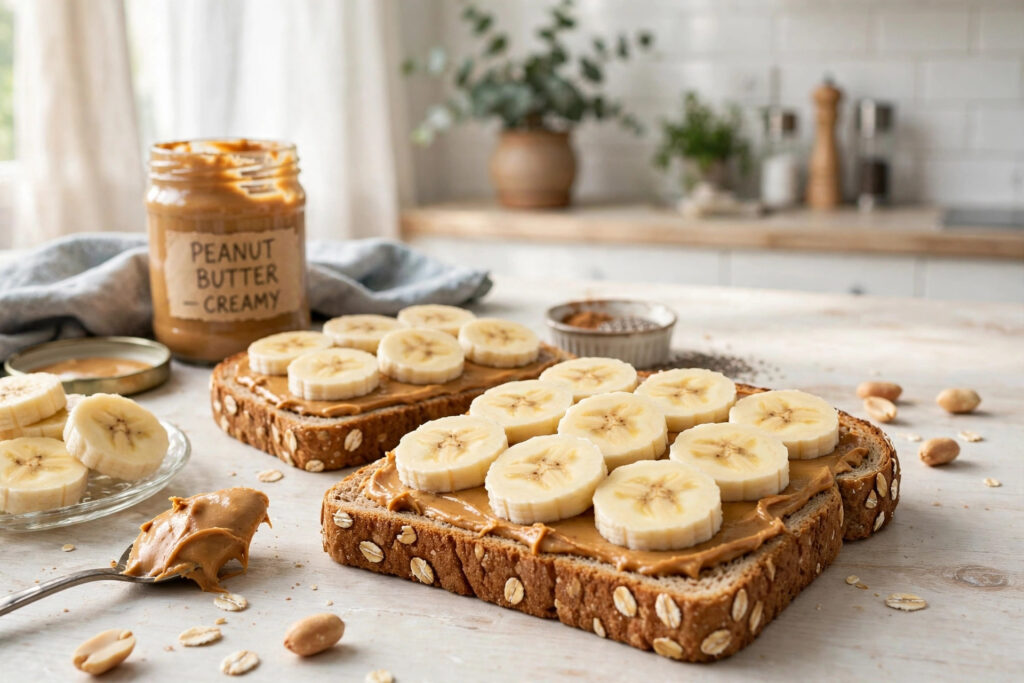
- The toast topper. Slice half a banana over one slice of whole grain toast with a thin spread of peanut butter, and the toast gains a sweet salty balance with about 200 calories in total. The combination carries about 6 grams of fiber with about 7 grams of protein, so it works as a real breakfast rather than a snack. Use half a banana for this one, because a whole banana on toast turns a healthy breakfast into a sugar sandwich, and a sugar sandwich is a sleepy morning.
Mistakes That Turn Banana Into A Weight Gain Food
The mistakes below are the reason the answer to is banana good for weight loss changes from yes to no in real life, because the ripeness counts calories, not good intentions, and the gap between the two is where most plans fail. The first mistake is the very ripe banana habit, and it is the most common one in the United States. A very ripe banana with brown spots carries more sugar and less resistant starch than a firm banana, with a glycemic index near 62 against 51 for a firm one, so it raises blood sugar faster and keeps hunger away for a shorter time. The fix is to eat bananas while they are yellow with a few green tips, and to freeze the ones that go brown, because a frozen banana makes nice cream while a brown banana makes a sugar load.
The second mistake is the banana smoothie trap, because a smoothie with two bananas, milk, peanut butter, and honey can pass 500 calories without noticing. A homemade smoothie with one banana, Greek yogurt, and berries costs about 200 calories, while a cafe smoothie with two bananas and syrup can cost 400 calories, and the gap between the two is the whole story. The fix is to use one banana per smoothie and skip the honey, because one banana is sweet enough on its own, and a smoothie that costs 200 calories is a meal, while a smoothie that costs 500 calories is a dessert.
The third mistake is banana bread, because a slice of banana bread can carry 200 to 300 calories with sugar, butter, and flour, and a person who eats two slices has eaten a meal of cake without noticing. Banana bread is a cake that happens to contain banana, not a healthy banana snack, and the word banana on the label does not change the calories inside it. The fix is to bake banana bread with half the sugar and no butter, or to eat a fresh banana instead, because a fresh banana costs 105 calories while a slice of banana bread costs more than twice as much.
The fourth mistake is three bananas a day, because three bananas hold about 315 calories with about 42 grams of sugar, and that is a lot of sugar for a single fruit, even a healthy one. A person who eats three bananas a day is eating a lot of sugar with very little protein, and a day with a lot of sugar and very little protein is a day with a lot of hunger. The fix is to eat one firm banana a day and to spend the other snack slots on protein, because a day with one banana and one yogurt holds hunger far better than a day with three bananas and nothing else.
The fifth mistake is expecting banana to work alone. A daily banana changes nothing when the rest of the day is fast food, sweet drinks, and no movement, because fat loss comes from the total day, not from a single fruit. Banana is a support player, and it only helps when food, sleep, and walking are already close to right. The people who get results from it are the ones who use it to replace chips and pastries, not the ones who buy it hoping it will fix a whole diet.
Banana Compared With Other Fruits
Apple is the closest rival to banana, and the comparison is honest rather than one sided. One medium apple holds about 95 calories with about 4 grams of fiber and about 19 grams of sugar, while one medium banana holds about 105 calories with about 3 grams of fiber and about 14 grams of sugar. Apple wins on fiber, because it carries one more gram of fiber for fewer calories, while banana wins on potassium, because it carries about 422 milligrams against about 195 milligrams in an apple. For weight loss, apple is the slightly better pick by the numbers, while banana is the better pick by convenience, because it needs no washing and no cutting, and the best plan uses both.
Grapes are the second comparison, and it is the one where banana wins clearly. One cup of grapes holds about 104 calories with about 1.4 grams of fiber and about 23 grams of sugar, while one medium banana holds about 105 calories with about 3 grams of fiber and about 14 grams of sugar. Banana gives more than twice the fiber for the same calories, with far less sugar, and it feels like a meal in a way that a handful of grapes never does. Grapes win on refreshment, because they are cold and juicy on a hot day, while banana wins on fullness, and for weight loss, fullness is what matters.
Mango is the third comparison, and it is the one where banana wins on portion. One cup of mango holds about 99 calories with about 23 grams of sugar and about 3 grams of fiber, while one medium banana holds about 105 calories with about 14 grams of sugar and about 3 grams of fiber. Mango carries far more sugar for the same calories, which is why mango sits on the avoid list in the fruits to avoid post, while banana does not. Mango wins on taste, because it is one of the sweetest fruits in the world, while banana wins on control, because one banana is a clear portion while one cup of mango is easy to double.
Berries are the fourth comparison, and it is the one where berries win clearly. One cup of strawberries holds about 50 calories with about 3 grams of fiber and about 7 grams of sugar, while one medium banana holds about 105 calories with about 3 grams of fiber and about 14 grams of sugar. Berries give the same fiber for half the calories and half the sugar, which makes them the best fruit for weight loss by the numbers. Banana wins on price and on fullness, because it costs far less per fruit and feels like a real snack, while berries win on calories, and the best plan uses berries when they are cheap and banana when they are not.
Orange is the last comparison, and it is the easiest one to settle. One medium orange holds about 62 calories with about 3 grams of fiber and about 12 grams of sugar, while one medium banana holds about 105 calories with about 3 grams of fiber and about 14 grams of sugar. Orange gives the same fiber for far fewer calories, with vitamin C that beats banana by a wide margin. Banana wins on convenience, because it needs no peeling with a knife and no sticky hands, while orange wins on calories, and for weight loss, orange is the better pick when the goal is the lightest fruit, while banana is the better pick when the goal is the easiest snack.
How To Buy Banana In The United States
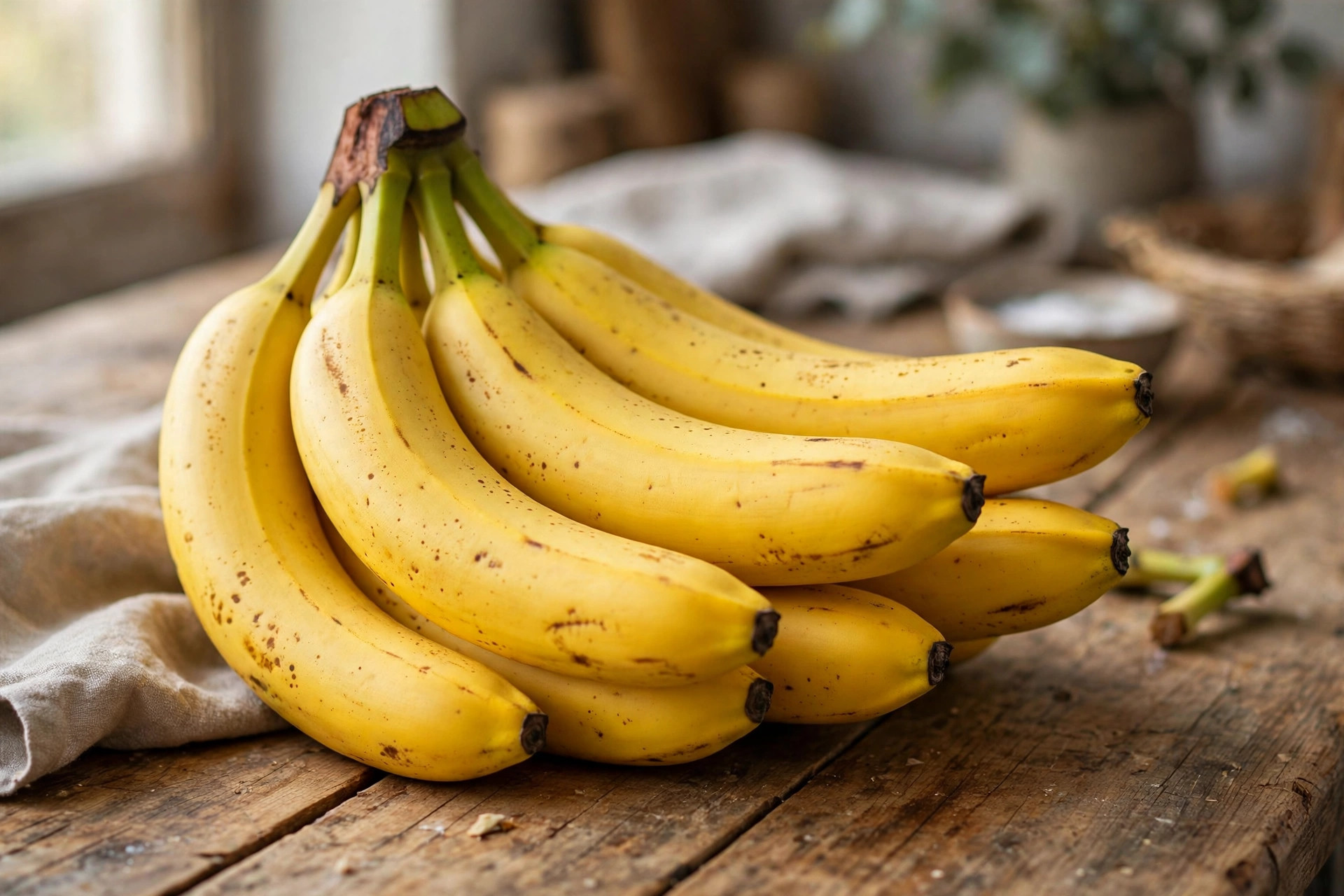
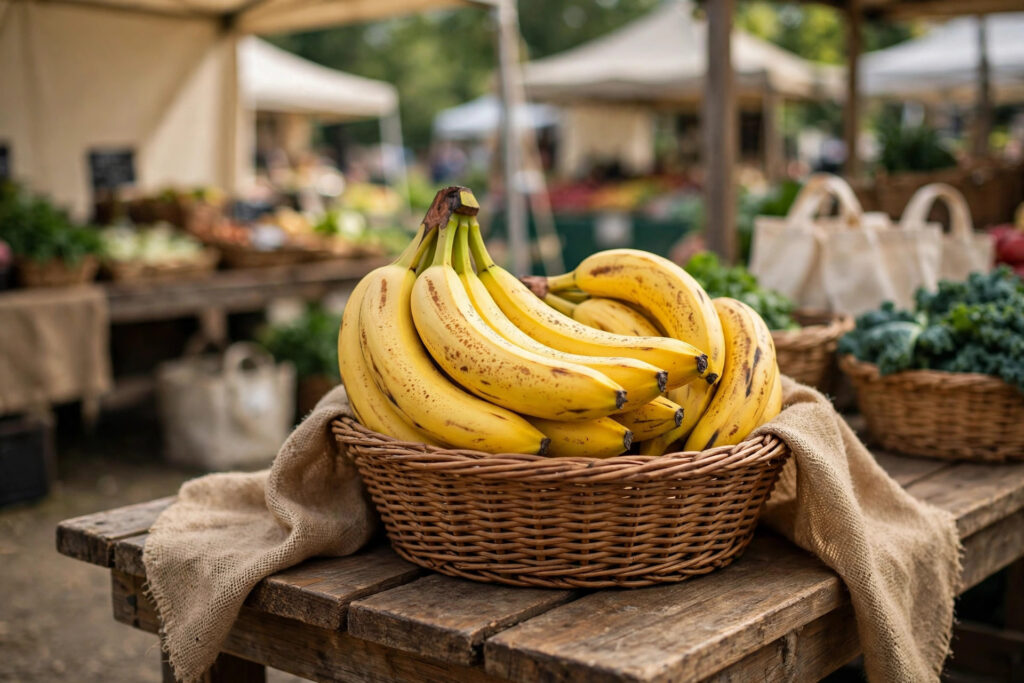
The ripeness test is the whole skill, and it takes less than a minute once the pattern is known. First, check the color, and a banana with yellow skin and a few green tips is firm and ready, while a banana with brown spots all over is very ripe and sweet, and a green banana is unripe and starchy. Second, squeeze it gently, and a firm banana gives a little under pressure, like a ripe peach, while a soft banana feels mushy and a hard banana feels like a rock. Third, check the stem, and a stem that is green and firm means the banana is fresh, while a stem that is dark and dry means the banana has been sitting for days.
The price is the second check, and it is the best news in this whole post. A pound of bananas in the United States usually costs about 60 to 70 cents, which makes banana one of the cheapest fruits on the shelf, and a bunch of six bananas costs about 1 dollar. A single banana costs about 20 cents, which is less than any other healthy snack, and that price is why banana is the best value fruit for weight loss. Buy the bunch when the price is fair, because a bunch that ripens over a week is a week of snacks for the price of a single coffee.
Storage is the last check, and it is where most bananas are lost. An unripe banana should sit on the counter at room temperature, and it will ripen in 2 to 3 days, faster if it sits in a paper bag with an apple. A ripe banana should be eaten within 2 days, or it will go brown, and a brown banana should be frozen in slices, because frozen banana makes nice cream and never wastes. A banana that is going brown should never be thrown away, because a frozen banana is a free dessert, and a saved banana is a free banana.
FAQs
Is banana good for weight loss?
A firm banana is good for weight loss as a snack, because one medium banana holds about 105 calories with about 3 grams of fiber and a glycemic index near 51, which keeps hunger away for hours. A very ripe banana is the one to watch, because it carries more sugar and less resistant starch, with a glycemic index near 62. One firm banana a day fits almost any diet, and it works best as a swap for chips or pastries, not as an extra on top of them. Banana does not burn fat, and no food does, so the benefit is only the fullness and the swap, not any magic in the fruit.
How many bananas can I eat a day to lose weight?
One firm banana a day is the right target for most people, and one firm banana means about 105 calories with about 3 grams of fiber and about 422 milligrams of potassium, which fits easily into a weight loss plan as a morning snack, an afternoon snack, or a pre workout bite. Two bananas a day can also work for people who are active and use banana in two different meals, but the second banana should replace another snack rather than sit on top of it. Three bananas a day is the upper limit, because three bananas hold about 315 calories with about 42 grams of sugar.
Can I eat banana at night when losing weight?
A banana at night can be a good snack, because half a banana with warm milk costs about 100 calories and carries magnesium and tryptophan that may support sleep, and a calm sleep is what the night craving is really asking for. A whole banana before bed is also fine for most people, but a full stomach at sleep time can feel heavy, so half a banana is the safer amount. Banana at night does not burn fat while sleeping, and no food does, so the benefit is only the calm sleep and the craving that ends, not any magic in the fruit.
Are bananas too sugary for weight loss?
Bananas are not too sugary for weight loss when the banana is firm and the amount is one a day, because 14 grams of sugar in a medium banana comes with fiber, water, potassium, and vitamins, which slow it down in a way that sugar in a soda never gets. A soda gives sugar with nothing else, while a banana gives sugar with a package that slows it down, and that package is the difference between a fruit and a sweet drink. A very ripe banana is the one to watch, because it carries more sugar and less resistant starch, so the ripeness matters more than the fruit itself.
Is banana before bed good for weight loss?
A banana before bed can help weight loss in the honest way, because half a banana with warm milk costs about 100 calories and carries magnesium and tryptophan that may support sleep, and a good sleep keeps hunger hormones steady the next day. A tired body asks for sugar in the morning, while a rested body does not, so a calm night is worth more than any single snack. Banana before bed does not burn fat while sleeping, and no food does, so the benefit is only the sleep and the craving that ends, not any magic in the fruit.
Conclusion
So the honest answer to is banana good for weight loss is that a firm banana is not a weight loss enemy, but it is also not a fat burner, and the truth sits in the middle where most honest food answers live. Banana gives fiber and resistant starch for about 105 calories per fruit, which is enough to end a craving and hold hunger for hours, and it replaces chips and pastries with a smaller sweeter swap that adds potassium. It is not a fat burner, and a very ripe banana will slow fat loss, but it does not need to be, because a food that makes a smaller daily calorie total easy to hold is exactly what weight loss needs.
Start tomorrow with one firm banana in the morning instead of a pastry, and judge it by the hunger at 10 in the morning rather than by the scale in the morning. If the morning feels calm and the pastry never happens, the banana is doing its job, and it will keep doing it for as long as the banana stays firm and the banana replaces a junk snack. That is the whole secret of banana, because it is not a trick food, it is a cheap filling fruit that fits real life, and real life is where weight loss is actually won.