- Cantaloupe is one of the lowest calorie fruits in the United States, because one cup of cubes holds only about 50 to 60 calories with about 90 percent water, which fills the stomach for very few calories.
- The water is the whole trick, because a full cup of cantaloupe weighs about 160 grams yet carries fewer calories than a small cookie, so a large bowl still fits a weight loss plan.
- Cantaloupe helps weight loss through volume and hydration, not through fat burning, because water and fiber add bulk while the sweet taste ends a craving without a dessert.
- A practical United States target is 1 to 2 cups a day, eaten as a snack or a dessert, and paired with protein like Greek yogurt or cottage cheese so the fullness lasts for hours.
Is Cantaloupe Good for Weight Loss And What It Actually Does
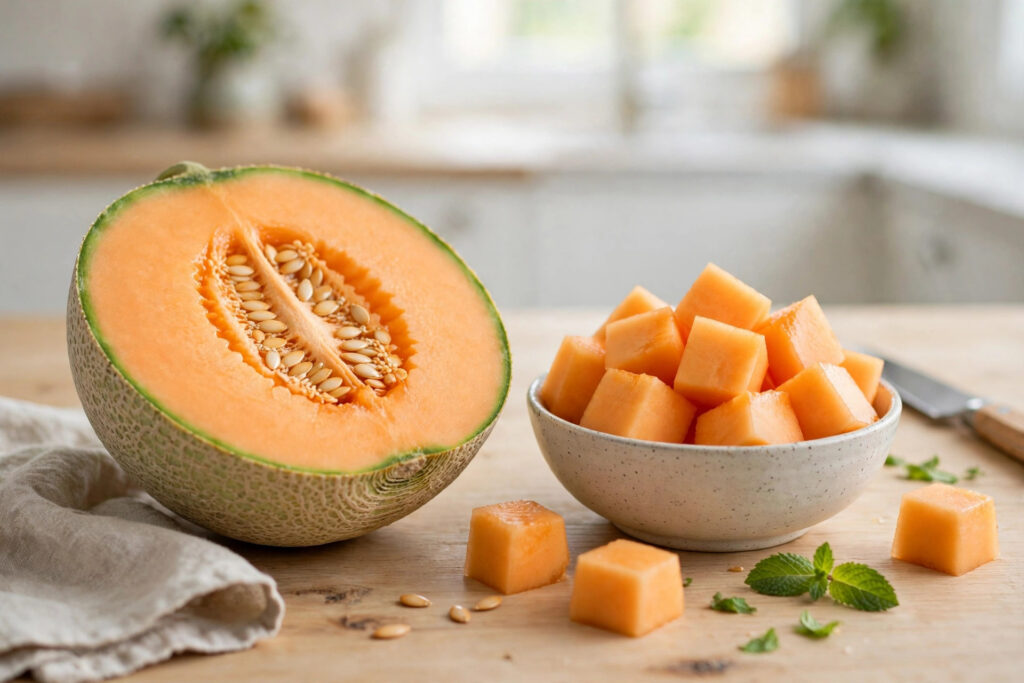
When people ask is cantaloupe good for weight loss, the honest answer is yes, with one condition, and the condition is the portion. Cantaloupe is one of the best fruits for weight loss in the United States, because one cup of cubes carries only about 50 to 60 calories, and that cup is large enough to feel like a real snack rather than a diet portion. A full bowl of cantaloupe feels generous, looks generous, and still costs fewer calories than a single cookie, which is exactly the kind of food that makes a weight loss plan easy to hold for months.
Cantaloupe works through volume, not through magic. The melon is about 90 percent water, so a cup of it weighs about 160 grams while holding only about 55 calories, and the stomach senses fullness from weight as well as from calories. That is why a large bowl of cantaloupe feels satisfying while a small handful of nuts at the same calories feels like nothing, because the melon takes up real space in the stomach. Volume is one of the most reliable weight loss tools, and cantaloupe is one of the cheapest ways to buy it, because a whole melon costs only a few dollars and fills several bowls.
The second reason is hydration, and it matters more than most diet plans admit. Many people eat when they are really just thirsty, because the body sends a weak thirst signal that feels like hunger, and a water rich fruit answers both signals at once. A cup of cantaloupe gives about 140 grams of water along with its calories, so it hydrates while it fills, and that hydration keeps energy steady through the afternoon. A person who snacks on cantaloupe instead of crackers often finds the afternoon craving gone, not because of willpower, but because the body finally got the water it was asking for.
The third reason is the sweet taste, because a weight loss plan with no sweet food at all is a plan that breaks on the first hard week. Cantaloupe is sweet enough to feel like a dessert, with about 12 to 13 grams of natural sugar per cup, yet it carries far less sugar than a cookie, a candy bar, or a sweet drink at the same satisfaction. That sweetness ends a craving without starting a second helping, because a full cup of melon feels complete in a way that a single square of chocolate never does. A fruit that feels like a treat is a fruit that protects the plan, and cantaloupe is one of the best at that job.
Cantaloupe Nutrition In The United States
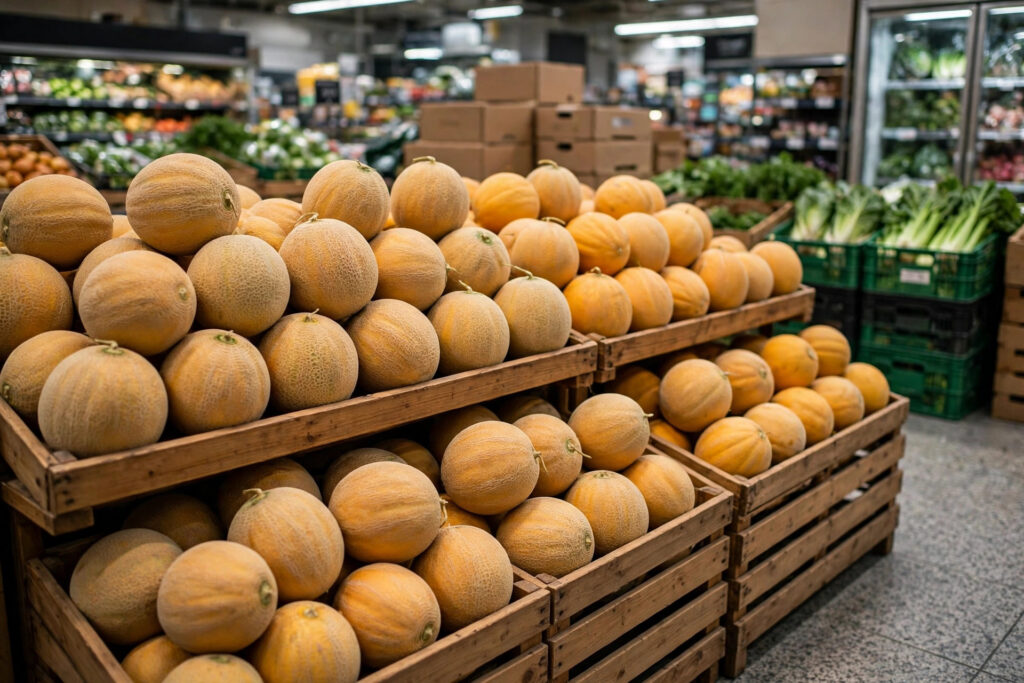
To judge cantaloupe fairly, start with the numbers, because the gap between cantaloupe and most snacks is the whole story. One cup of cubed cantaloupe carries about 50 to 60 calories, about 12 to 13 grams of sugar, about 1.5 grams of fiber, about 1 gram of protein, and about 270 milligrams of potassium, with almost no fat and almost no sodium. A whole medium melon gives about 3.5 cups of cubes, which means the entire melon carries only about 190 calories, and that is less than a single large muffin. Those numbers leave room for a normal meal after the snack, and the day stays inside a useful calorie budget.
Vitamins round out the nutrition picture, and they are worth a short mention because they explain why cantaloupe beats most sweets. One cup gives a large share of the daily vitamin A from beta carotene, which supports eyes and skin, plus about 60 percent of the daily vitamin C, which supports the immune system. None of those nutrients burns fat on its own, and no honest post should claim that they do, but they do mean that the calories spent on cantaloupe buy real nutrition, while the same calories spent on candy buy nothing except sweetness, which is a real advantage over weeks and months of dieting.
Sugar is the number that needs an honest answer, because cantaloupe is sweet and sweet food always raises a question. One cup carries about 12 to 13 grams of natural sugar, which is more than a cup of berries and less than a cup of mango, and the glycemic index of cantaloupe is about 65, which counts as medium. But the glycemic load of one cup is low, about 4, because the water and the fiber slow the sugar down, and a low glycemic load is what actually matters for hunger and blood sugar. The practical rule is simple, and it holds for every fruit, because one or two cups a day is a healthy habit while a whole melon at one sitting is a lot of sugar at once.
Potassium is a small extra worth one honest line. One cup of cantaloupe gives about 270 milligrams of potassium, which supports normal blood pressure and helps the body balance the sodium from salty meals in the United States. Potassium does not cause weight loss, and no honest post should claim that it does, but it does mean that cantaloupe is a better snack than salty chips, because the melon adds a useful mineral while the chips add only salt and fat. That is the kind of small advantage that adds up across a whole summer of snacking.
Why Cantaloupe Helps Weight Loss
Volume is the first reason cantaloupe earns its place in a weight loss plan, because a food that fills the stomach for very few calories is the easiest food to eat more of. One cup of cantaloupe weighs about 160 grams and holds only about 55 calories, while a small cookie weighs about 15 grams and holds about 80 calories, so the melon gives ten times the weight for fewer calories. That weight is what the stomach feels, and a stomach that feels full stops asking for food, which is why a large bowl of melon ends a craving while a small snack at the same calories never does. A person who eats cantaloupe first, before the rest of the snack, often finds the rest of the snack unneeded, and that is the whole method in one habit.
Low calorie density is the second reason, and it is the same idea seen from the other side. Foods with a low calorie density give a lot of food for a few calories, while foods with a high calorie density give a little food for a lot of calories, and weight loss is far easier on low density foods. Cantaloupe sits near the bottom of the density scale with water rich fruits and vegetables, at about 34 calories per 100 grams, while nuts sit near the top at about 600 calories per 100 grams. That gap is why a person can eat a full cup of cantaloupe without thinking and still lose weight, while the same careless eating with nuts adds weight in a week.
Hydration is the third reason, and it works quietly in the background. The body often reads thirst as hunger, because the thirst signal is weak and easy to miss, and a water rich fruit answers both signals at once. A cup of cantaloupe gives about 140 grams of water along with its calories, so it hydrates while it fills, and that hydration keeps energy steady through the afternoon. A person who snacks on melon instead of crackers often finds the afternoon craving gone, not because of willpower, but because the body finally got the water it was asking for, and a hydrated body asks for less food.
Sweet satisfaction is the fourth reason, and it is the one most diet plans ignore. A weight loss plan with no sweet food at all raises stress, and stress raises the appetite for sweet and fatty food, which is the exact food the plan forbids. A cup of ripe cantaloupe breaks that loop, because it gives the brain a sweet taste to look forward to, and a sweet taste that arrives every day keeps motivation alive through the flat weeks. The trick is the fruit, because a sweet fruit is a treat that costs 55 calories, while a sweet cookie is a treat that costs 150 calories, and the cheaper treat is the one that survives a whole summer.
How Much Cantaloupe To Eat Each Day
One to 2 cups a day is the right target for most people, and one cup means about 160 grams of cubes, or about a quarter of a medium melon. That amount gives about 50 to 120 calories, which fits easily into a weight loss plan as a snack or a dessert, and it is enough to end a craving without starting a second helping. Three cups a day can also work for people who are very active or who eat a lot of fruit, but the third cup should replace another sweet rather than sit on top of it, or the extra sugar will quietly add up.
The best time for cantaloupe is the afternoon snack or just after a meal, because a cup eaten as a dessert feels like the end of eating, while the same cup eaten alone at ten in the morning can feel like the start of snacking. After lunch or after dinner, the stomach is already partly full, so one cup feels complete, and the meal plus the melon together feel like a finished event. Eating fruit on an empty stomach is not a problem the way eating chocolate is, because melon is light and watery, but the portion still matters, because a whole melon at one sitting is about 190 calories with about 45 grams of sugar, which is a lot of sugar at once.
A whole melon is the number to watch, because a medium cantaloupe gives about 3.5 cups of cubes, and it is easy to finish in front of a screen without noticing, because the cubes are small and mild. The fix is to cut one cup and put the rest of the melon away before eating, because a melon that stays in the fridge cannot be finished by accident. Single serve cups and pre cut containers are another good fix, because they control the portion without any measuring, and they also stop waste for people who eat melon only a few times per week.
Evening is the easiest time, and it deserves a straight answer. Cantaloupe after dinner is the best use of the daily portion, because it closes the kitchen and gives the day a sweet ending, and the light watery fruit sits easy on the stomach before sleep. A large bowl late at night is still fine, because melon has no caffeine and almost no fat, so it disturbs sleep far less than chocolate or ice cream. The rule is simple, and it holds at every hour of the day, because a measured cup helps and a whole melon at once is a lot of sugar, no matter when it is eaten.
7 Ways To Enjoy Cantaloupe For Weight Loss
- The chilled cubes snack. Cut one cup of cantaloupe into cubes, chill it for an hour, and eat it slowly with a fork. The cold cubes feel refreshing on a hot day, and the fork slows eating down so one cup feels like a full snack. This is the simplest use in the whole post, because it needs no recipe and no planning, and it replaces a bag of chips with about 55 calories instead of 150.
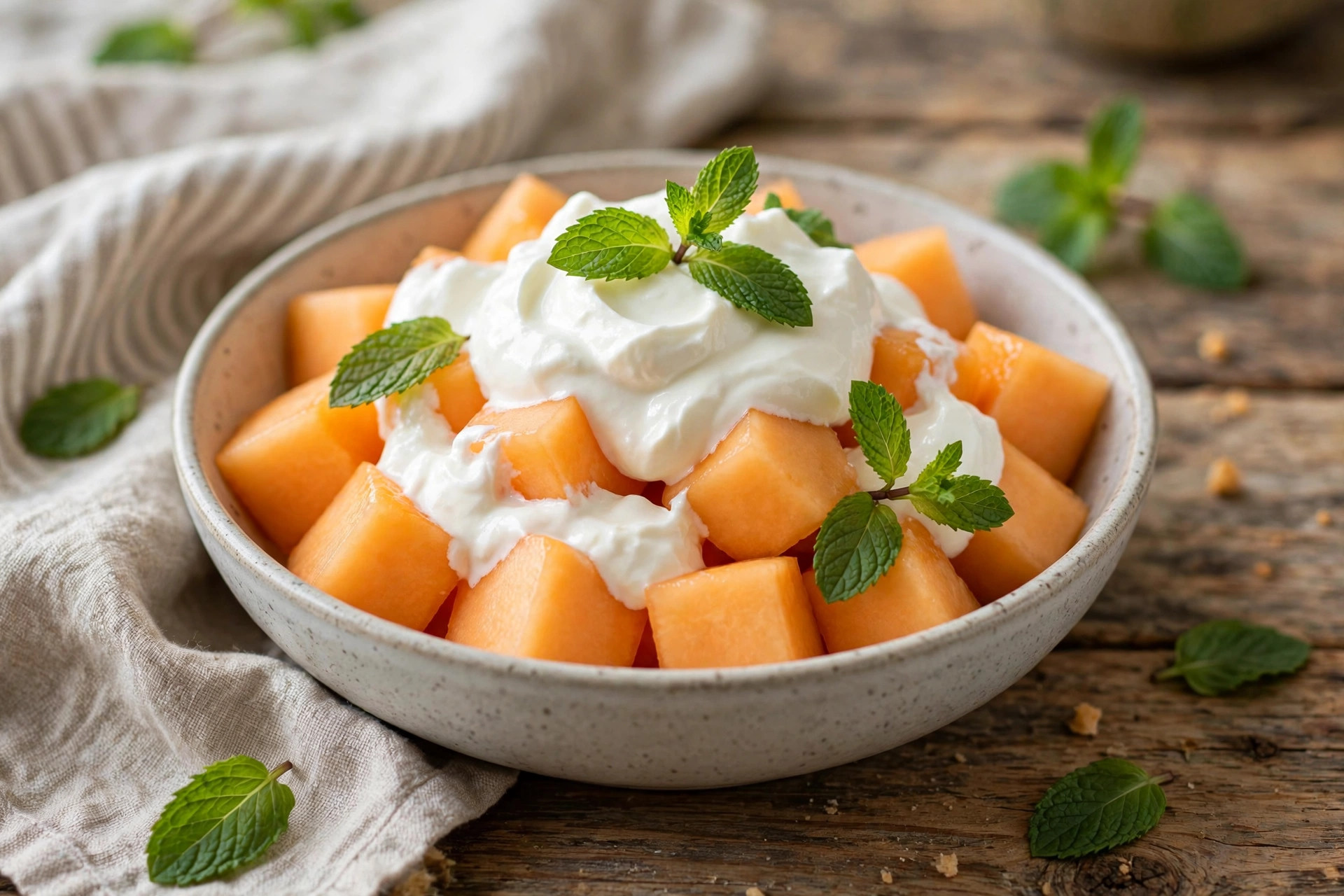
- The Greek yogurt partner. Pair one cup of cantaloupe cubes with half a cup of plain Greek yogurt, and the bowl gains about 10 grams of protein with only about 80 extra calories. The combination is one of the highest protein snacks in this whole series, with about 11 grams of protein in a single bowl, and it holds hunger for hours in a way that melon alone never does. Use plain yogurt for this one, because flavored yogurt adds sugar to a snack that was chosen for being light.
- The smoothie. Blend one cup of cantaloupe with half a cup of Greek yogurt and a handful of ice, with no added sugar, and the result is a thick sweet smoothie with about 130 calories and real protein. A cafe smoothie can carry 300 to 400 calories with syrup and juice, so the homemade version saves about 200 calories while tasting almost the same. This works best as a breakfast or an afternoon snack, when a cold drink feels like comfort, because comfort is what the craving is really asking for.
- The cottage cheese partner. Pair one cup of cantaloupe cubes with half a cup of low fat cottage cheese, and the bowl gains about 12 grams of protein with only about 90 extra calories. The sweet melon and the salty cheese balance each other, and the combination feels like a real meal rather than a snack. This works best as a light lunch on a hot day, because it is cool, filling, and ready in two minutes with no cooking at all.
- The fruit salad. Mix one cup of cantaloupe cubes with half a cup of berries and half a cup of sliced strawberries, and the bowl gains fiber, color, and variety with only about 40 extra calories. The combination feels like a restaurant dessert for about 100 calories in total, and it holds hunger far longer than melon alone. This works best with ripe fruit, because a fruit salad is only as good as its sweetest piece.
- The frozen cubes. Freeze cantaloupe cubes on a tray, then eat them straight from the freezer like a natural sorbet, and the frozen cubes feel like ice cream with only about 55 calories per cup. The cold slows eating down, so one cup lasts ten minutes, and the sweet frozen fruit ends a dessert craving without any sugar added. This works best on summer evenings, when a cold treat feels like the only thing that will do.
- The mint and lime. Toss one cup of cantaloupe cubes with fresh mint leaves and a squeeze of lime, and the mint and the lime lift the flavor so the melon tastes sweeter without any sugar added. The combination carries no extra calories at all, and it turns a plain bowl of fruit into a dish that feels made, not just cut. This works best for guests, because a bowl that looks dressed feels like a dessert, and a dessert that costs 55 calories is the best kind of dessert.
Mistakes That Turn Cantaloupe Into A Weight Gain Food
The mistakes below are the reason the answer to is cantaloupe good for weight loss changes from yes to no in real life, because the bowl counts calories, not good intentions, and the gap between the two is where most plans fail. The first mistake is eating the whole melon at once, and it is the most common one in the United States. A medium cantaloupe gives about 3.5 cups of cubes with about 45 grams of sugar, and it is easy to finish in front of a screen without noticing, because the cubes are small and mild. The fix is to cut one cup and put the rest of the melon away before eating, because a melon that stays in the fridge cannot be finished by accident.
The second mistake is the fruit juice trap, because a glass of cantaloupe juice sounds healthy while carrying the sugar of three cups of melon with none of the fiber or the water weight that makes the fruit filling. A large glass of melon juice can carry 150 calories with 30 grams of sugar, and the juice is gone in two minutes while the hunger stays. The fix is to eat the melon, because a cup of cubes gives the same flavor with fiber, water, and ten minutes of eating, while the juice gives only sugar and speed.
The third mistake is the sweetened fruit cup, because canned fruit cups in syrup sound like fruit while carrying mostly sugar water. A small cup of cantaloupe in heavy syrup can carry 100 calories with 20 grams of sugar, and the syrup adds calories that fresh melon never has. The fix is to buy fresh melon or fruit packed in juice, because a fresh cup gives the same sweetness with far fewer calories and far more fiber. Check the label every time, because the word fruit on the front never tells the truth about the syrup inside.
The fourth mistake is pairing melon with the wrong foods, because cantaloupe with ice cream, whipped cream, or sweet yogurt turns a 55 calorie snack into a 300 calorie dessert. The melon is not the problem, the topping is, because a cup of melon with a scoop of ice cream costs five times more than the melon alone. The fix is to pair melon with protein, because Greek yogurt or cottage cheese adds fullness for about 80 calories, while ice cream adds only sugar and fat for 200 calories.
The fifth mistake is expecting melon to work alone. A daily cup changes nothing when the rest of the day is fast food, sweet drinks, and no movement, because fat loss comes from the total day, not from a single fruit. Cantaloupe is a support player, and it only helps when food, sleep, and walking are already close to right. The people who get results from it are the ones who use it to replace a heavier snack, not the ones who buy it hoping it will fix a whole diet.
Cantaloupe Compared With Other Sweet Foods
Watermelon is the closest rival to cantaloupe, and the comparison is honest rather than one sided. One cup of watermelon carries about 46 calories with about 9 grams of sugar and about 1 gram of fiber, while one cup of cantaloupe carries about 55 calories with about 12 grams of sugar and about 1.5 grams of fiber. The numbers are close, and both fruits are excellent for weight loss, but cantaloupe wins on nutrition, because it carries far more vitamin A and vitamin C, while watermelon wins on price in summer, because it is often cheaper per pound. Either fruit is a fine daily snack, and the best plan uses both across the week.
Grapes are the second comparison, and they show why portion control matters. One cup of grapes carries about 62 calories with about 15 grams of sugar, which looks close to cantaloupe on paper, but grapes are small and easy to eat by the handful, so most people eat two cups without noticing. One cup of cantaloupe feels like a full bowl, while two cups of grapes feel like a small snack, so the melon is easier to control than the grape bowl. A small bowl of grapes with a cup of melon is a fine snack, while a bag of grapes with no plan is a habit that adds weight week after week.
Banana is the third comparison, and it is the one where banana wins on fullness. A medium banana carries about 105 calories with about 14 grams of sugar and about 3 grams of fiber, and it holds hunger far longer than a cup of melon, because it is denser and richer in starch. Cantaloupe wins on calories, because a cup of melon costs half the calories of a banana, and it wins on hydration, because it is 90 percent water. A banana is the better pre workout snack, because it gives steady energy, while cantaloupe is the better evening snack, because it is light and sweet without heaviness.
Mango is the fourth comparison, and it is the one where cantaloupe wins clearly. One cup of mango carries about 100 calories with about 23 grams of sugar and about 3 grams of fiber, which is nearly double the sugar of cantaloupe at nearly double the calories. Mango is richer and more filling, because it is denser, but for weight loss the melon is the better daily fruit, because a cup of cantaloupe costs half the calories and still feels like a sweet treat. Mango is still a fine occasional fruit, but for a daily habit, cantaloupe is the better pick by a wide margin.
Ice cream is the last comparison, and it is the one where cantaloupe wins on every measure except cold comfort. A cup of regular ice cream carries about 250 to 300 calories with about 25 grams of sugar, and it is gone in five minutes, while one cup of frozen cantaloupe cubes carries about 55 calories and takes ten minutes to enjoy slowly. Ice cream wins on richness in summer, because nothing else feels the same on a hot day, but for a daily dessert, cantaloupe is cheaper in calories and stronger in freshness. A bowl of melon with mint beats a cup of ice cream on most nights.
How To Buy Cantaloupe In The United States
The smell is the first check, and it is the most reliable one. Hold the melon close and smell the stem end, and a ripe cantaloupe gives a sweet musky smell, while an unripe one smells like nothing at all. A melon with no smell is not ready, and a melon with a sour smell is overripe, so the sweet smell is the line between the two. This one check takes five seconds and it beats every other test on the shelf.
Weight is the second check, and it is almost as reliable. Pick the melon up and feel its weight, and a ripe cantaloupe feels heavy for its size, because a heavy melon is full of water and juice, while a light melon of the same size is dry inside. Compare two melons of the same size and take the heavier one, because the heavier one is almost always the sweeter one. Size alone means nothing, because a large light melon is worse than a small heavy one.
The stem end is the third check, and it tells the story of the harvest. Press the stem end gently with a thumb, and a ripe melon gives slightly under pressure, while an unripe one feels hard as stone. Look at the netting on the skin too, and a ripe cantaloupe has a raised beige netting with no green tint underneath, while a green tint means the melon was picked too early. A melon with a clean stem scar and full netting is the one to take home.
Price is the last check, and the news is good, because cantaloupe is usually cheap, often below 3 dollars per melon in large United States supermarkets in summer, and the whole melon gives about 3.5 cups of cubes. Cut melon costs more per cup but saves time, and pre cut containers are a fair choice for people who eat melon only a few times per week. Either size works for weight loss, as long as the melon smells sweet, feels heavy, and gives slightly at the stem, because a ripe melon is a sweet melon, and a sweet melon is the one that ends a craving.
FAQs
Is cantaloupe good for weight loss?
Yes, for most healthy adults, because cantaloupe gives a large sweet bowl for only about 50 to 60 calories per cup, with about 90 percent water and about 1.5 grams of fiber, which fills the stomach for very few calories. The sweet taste ends a craving without a dessert, the water keeps the body hydrated, and the portion is easy to control at 1 to 2 cups a day. The answer changes when the melon is eaten as juice, because juice carries the sugar of three cups with none of the fiber, so the whole fruit is the one that earns the yes.
How much cantaloupe can I eat a day to lose weight?
One to 2 cups a day is the right target for most people, and one cup means about 160 grams of cubes, or about a quarter of a medium melon. That amount gives about 50 to 120 calories, which fits easily into a weight loss plan as a snack or a dessert after a meal. Three cups a day can also work for people who are very active or who eat a lot of fruit, but the third cup should replace another sweet rather than sit on top of it, or the extra sugar will quietly add up.
Is cantaloupe better than watermelon for weight loss?
Both fruits are excellent for weight loss, because one cup of watermelon carries about 46 calories and one cup of cantaloupe carries about 55 calories, with similar water and fiber. Cantaloupe wins on nutrition, because it carries far more vitamin A and vitamin C, while watermelon wins on price in summer, because it is often cheaper per pound. Either fruit is a fine daily snack, and the best plan uses both across the week, because variety keeps a fruit habit alive for months.
Does cantaloupe have a lot of sugar?
Cantaloupe has a moderate amount of sugar, with about 12 to 13 grams per cup, which is more than a cup of berries and less than a cup of mango. The glycemic index is about 65, which counts as medium, but the glycemic load of one cup is low, about 4, because the water and the fiber slow the sugar down. One to 2 cups a day is a healthy amount for most people, while a whole melon at one sitting gives about 45 grams of sugar at once, which is too much for a single snack.
Can I eat cantaloupe at night for weight loss?
Yes, cantaloupe at night can fit a weight loss plan, and a cup after dinner is the best use of the daily portion, because it closes the kitchen and gives the day a sweet ending. The fruit is light and watery with no caffeine and almost no fat, so it sits easy on the stomach before sleep, unlike chocolate or ice cream. The portion must stay near 1 to 2 cups, because a whole melon late at night is a lot of sugar at once, while a measured cup ends eating and starts the night well.
Conclusion
So the honest answer to is cantaloupe good for weight loss is yes for most people, when the portion stays near 1 to 2 cups a day, and it is eaten as a snack or a dessert, not as juice and not as a whole melon at one sitting. Cantaloupe gives a large sweet bowl for about 50 to 60 calories per cup, which is enough to end a craving without breaking the day, and it keeps hunger away with water and fiber in a way that few snacks at the same calories can match. It is not a fat burner, and its vitamins do not melt fat, but it does not need to be, because a fruit that makes a smaller daily calorie total easy to hold is exactly what weight loss needs.
Start tomorrow with one cup of chilled cantaloupe cubes in the afternoon, with a fork and ten slow minutes, and judge it by hunger at dinner rather than by the scale in the morning. If the afternoon craving stays quiet and the evening feels complete, the melon is doing its job, and it will keep doing it for as long as the portion stays honest and the melon stays ripe. That is the whole secret of cantaloupe, because it is not a trick food, it is a sweet watery fruit that fits real life, and real life is where weight loss is actually won.