- Plain nonfat Greek yogurt gives about 15 to 20 grams of protein for about 90 to 100 calories per cup, which is one of the best protein to calorie ratios in any United States supermarket.
- The honest answer is yes for most people, but only for the plain kind, because a flavored tub can add 12 to 19 grams of sugar and turn a weight loss food into a dessert.
- One serving of about three quarters of a cup to one cup per day fits most weight loss plans, and it works best at breakfast or as an afternoon snack, when protein keeps hunger away for hours.
- Greek yogurt is not a fat burner and probiotics do not melt fat, it works because high protein plus low calories plus real fullness makes a smaller daily calorie total far easier to hold.
Is Greek Yogurt Good for Weight Loss And What Makes It Different

Many shoppers in the United States ask is greek yogurt good for weight loss, and the honest answer is yes, when the plain kind is chosen and the portion is kept in check. Greek yogurt is regular yogurt that has been strained to remove much of the liquid whey, and that one step changes everything about it. Straining takes out water and some natural milk sugar, and it leaves behind a thicker food with roughly double the protein of regular yogurt in the same serving. A cup of plain nonfat Greek yogurt carries about 15 to 20 grams of protein, while a cup of plain regular yogurt carries about 8 to 10 grams, and that gap is the reason Greek yogurt shows up in almost every weight loss plan in the United States.
The thickness matters too, because a thick food feels like a real meal in a way that a thin yogurt never does. A spoon stands up in Greek yogurt, and a bowl of it with berries feels finished, while the same calories as a drinkable yogurt leave most people looking for something else within the hour. That feeling of fullness is not a small detail, because weight loss in real life is decided less by willpower and more by how long a meal keeps hunger away. A breakfast that holds hunger until lunch saves far more calories than a breakfast that needs a snack at ten in the morning, and Greek yogurt is built for exactly that job.
There is also a practical reason Greek yogurt works so well in the United States, and it is that it is cheap, fast, and sold everywhere. A single serve tub costs about one dollar in most supermarkets, it needs no cooking, and it travels well in a lunch bag with an ice pack. That matters because the foods that actually help weight loss are the ones that survive busy mornings, office days, and tired evenings, not the ones that need an hour in the kitchen. Greek yogurt survives all three, which is why it keeps appearing in weight loss plans long after trendier foods have come and gone.
Greek Yogurt Nutrition In The United States
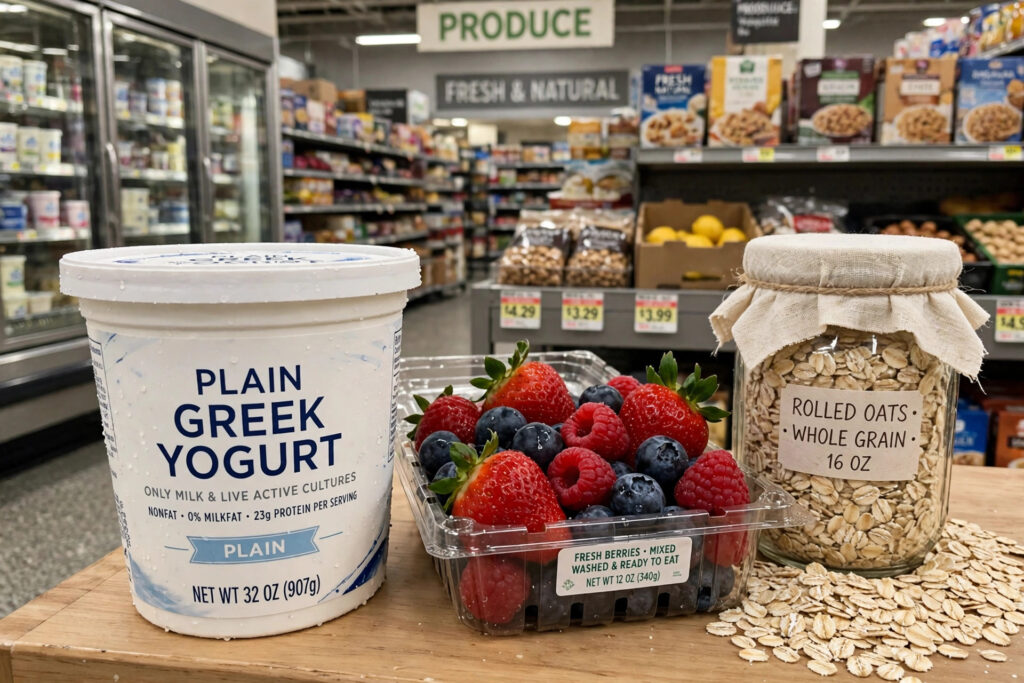
To judge Greek yogurt fairly, start with the numbers, because the gap between plain and flavored tubs is the whole story. A cup of plain nonfat Greek yogurt, about 170 grams, carries about 90 to 100 calories, about 15 to 20 grams of protein, about 5 to 6 grams of natural milk sugar, almost no fat, and about 15 percent of the daily calcium target. Those numbers are hard to beat, because very few foods give 17 grams of protein for 100 calories, and fewer still do it with no cooking and no preparation at all.
The same cup in a flavored version tells a very different story. A strawberry or vanilla tub of the same size often carries 130 to 160 calories and 12 to 19 grams of sugar, with protein falling to about 11 to 12 grams, because fruit puree and sweetener take the place of yogurt. A honey flavored tub can pass 20 grams of sugar per cup, which is close to the sugar in a small dessert. The label still says Greek yogurt, and the tub still looks healthy, but the food inside it has moved from a protein food to a sweet food, and the weight loss case falls apart with it.
Full fat Greek yogurt sits in the middle, and it deserves an honest place in this post. A cup of plain full fat Greek yogurt carries about 220 to 250 calories with about 15 to 17 grams of protein and about 11 grams of fat, and much of that fat is saturated. It is still filling, and it still beats most snacks, but it costs more than double the calories of the nonfat version for the same protein, so it fits a weight loss plan only in a smaller portion, about half a cup, or on days when the rest of the food is light. For most people trying to lose weight in the United States, plain nonfat is the better daily choice, and full fat is the better weekend choice.
Calcium and B vitamins round out the nutrition picture, and they are worth a short mention because they explain why Greek yogurt beats a protein shake for many people. A cup gives calcium for bones, vitamin B12 for energy, and potassium for blood pressure, all in a whole food that also brings live cultures. None of those nutrients burns fat on its own, and no honest post should claim that they do, but they do mean that the calories spent on Greek yogurt buy more nutrition than the same calories spent on a bar or a shake, which is a real advantage over weeks and months of dieting.
Why Greek Yogurt Helps Weight Loss
Protein is the first reason Greek yogurt earns its place in a weight loss plan, because protein is the most filling nutrient per calorie, and it also protects muscle while fat comes off. A body that loses weight without enough protein loses muscle along with fat, and lost muscle lowers daily calorie burn, which makes the next pounds harder to lose. Greek yogurt defends against that pattern with every serving, because 17 grams of protein at breakfast is a real share of the daily target, and it arrives before the day has even started. People who eat a high protein breakfast report less hunger at lunch and fewer cravings in the afternoon, and that pattern shows up again and again in weight loss research in the United States.
Fullness is the second reason, and it works through texture and volume as much as through protein. A thick cup of Greek yogurt with a handful of berries and a spoon of oats takes time to eat, and slow eating gives the stomach time to send fullness signals to the brain. A liquid breakfast of the same calories is gone in two minutes and leaves the stomach asking for more, while a thick bowl still feels present twenty minutes later. That difference in eating speed is one of the quiet reasons Greek yogurt outperforms many foods with similar calories on paper, because paper calories and real hunger are not the same thing.
Blood sugar is the third reason, and it matters most for people who crash in the late morning. A plain Greek yogurt breakfast has very little sugar, so blood sugar rises slowly and falls slowly, and energy stays steady until lunch. A sweetened yogurt or a pastry breakfast does the opposite, with a fast rise, a fast fall, and a craving for something sweet by ten in the morning. That craving is not a failure of willpower, it is a normal response to a fast blood sugar fall, and a low sugar breakfast removes the trigger at the source.
Probiotics deserve an honest paragraph, because they are the most oversold part of Greek yogurt. Greek yogurt does carry live cultures, and those cultures can support gut health and digestion, especially for people who eat little fermented food. But gut health is not fat loss, and no probiotic strain has been shown to melt body fat on its own. The honest claim is smaller and still useful, because a healthy gut digests food better, causes less bloating, and makes a weight loss diet more comfortable to follow. That is a real benefit, and it is enough, without turning it into a fat burning claim that the evidence does not support.
How Much Greek Yogurt To Eat Each Day
One serving a day is the right target for most people, and one serving means about three quarters of a cup to one cup, or about 150 to 170 grams. That serving gives 15 to 20 grams of protein for about 90 to 100 calories, which is a strong return for the calories spent. Two servings a day can also work, especially for people who train hard or who struggle to reach their protein target, but the second serving should replace another food rather than sit on top of it, or the extra 100 calories quietly erase the benefit.
Breakfast is the best time for Greek yogurt in a weight loss plan, because protein early in the day sets hunger low for hours, and a high protein breakfast is the single easiest change in most United States diets. A bowl of plain Greek yogurt with berries and a small handful of nuts covers protein, fiber, and healthy fat in one bowl, and it takes three minutes to build. Lunch is the second best slot, as a dip or a dressing base, because it replaces mayonnaise and sour cream with protein, and that swap alone can save 100 to 150 calories in a single meal.
Evening is the trickiest time, and it deserves a straight answer. Greek yogurt at night is not bad for weight loss, and a small bowl can be a good late snack because protein before bed keeps hunger away through the night and supports muscle repair during sleep. But the portion must stay small, about half a cup, and the toppings must stay plain, because a large bowl with honey and granola at nine in the evening is a second dinner, not a snack. The rule is simple, and it holds at every hour of the day, because a small plain serving helps and a large sweet serving hurts, no matter when it is eaten.
7 Ways To Eat Greek Yogurt For Weight Loss
- The breakfast bowl. Start with one cup of plain nonfat Greek yogurt, add a handful of berries, and finish with one tablespoon of chia seeds or ground flaxseed. Berries add fiber and sweetness with very few calories, and the seeds add healthy fat that slows digestion further. The whole bowl stays under 250 calories with about 20 grams of protein, and it holds hunger for three to four hours, which is longer than most cereal breakfasts manage at twice the calories.
- The smoothie base. Blend half a cup of Greek yogurt with a frozen banana, a handful of spinach, and water or unsweetened almond milk, and the result is a thick smoothie with about 15 grams of protein and no added sugar. The yogurt replaces milk and protein powder in one move, and the frozen banana gives sweetness without honey or syrup. Keep the banana to one small fruit, because two large bananas add enough sugar and calories to change the meal from light to heavy.
- The savory dip. Mix plain Greek yogurt with lemon juice, garlic, salt, and fresh herbs, and it becomes a dip for carrots, peppers, cucumber, and celery that carries about 30 calories per quarter cup. The same vegetables with ranch dip carry about 140 calories per quarter cup, so the swap saves more than 100 calories every time the dip is served. This is one of the easiest wins in the whole post, because nothing about the meal feels like a diet, and the calories fall anyway.
- The dressing swap. Replace half the mayonnaise in a sandwich spread or a salad dressing with plain Greek yogurt, and the flavor stays creamy while the calories fall by about half. A tuna salad made with half yogurt and half mayonnaise tastes almost the same as the full mayonnaise version, but it saves about 80 calories per serving and adds 8 grams of protein. Over a week of lunches in the United States, where sandwiches and salads are daily food, that swap alone can save 400 to 500 calories.
- The dessert bowl. Freeze plain Greek yogurt with mashed berries in a small container for two hours, and it turns into a frozen dessert with the texture of soft ice cream and a fraction of the calories. A cup of this frozen yogurt with berries carries about 120 calories, while a cup of regular ice cream carries about 250 to 300 calories, and the yogurt version also brings 15 grams of protein. This works best as a planned dessert after dinner, not as a free extra, because a dessert is still a dessert even when it is made from yogurt.
- The overnight oats partner. Stir half a cup of Greek yogurt into overnight oats made with rolled oats, milk, and chia seeds, and the oats gain protein, thickness, and staying power. Plain oatmeal on its own is healthy but low in protein, which is why many people feel hungry an hour after eating it, and the yogurt fixes exactly that weakness. The combined bowl carries about 300 calories with about 18 grams of protein, which is a full breakfast that holds until lunch.
- The marinade and cooking base. Use plain Greek yogurt as a marinade for chicken breast, with lemon, garlic, and spices, and the acid tenderizes the meat while the yogurt keeps it moist in the oven. The same yogurt replaces sour cream on tacos, baked potatoes, and chili, saving about 40 calories per two tablespoons while adding protein to the meal. These cooking uses matter because they put Greek yogurt into dinners, not just breakfasts, and a food that appears in two meals a day earns its place in a weight loss plan far faster than a food that appears once.
Mistakes That Turn Greek Yogurt Into A Weight Gain Food
The mistakes below are the reason the answer to is greek yogurt good for weight loss changes from yes to no in real life, because the tub is rarely the problem and the toppings usually are. The first mistake is buying flavored tubs by default, because a strawberry or vanilla tub can carry 12 to 19 grams of added sugar, and most shoppers never turn the tub around to check. The fix is simple, and it takes ten seconds in the supermarket, because plain nonfat is almost always on the same shelf, at the same price, with the same protein and a third of the sugar.
The second mistake is the topping pile, and it is the most common one in the United States. A spoon of honey adds 60 calories, a quarter cup of granola adds 100 to 140 calories, and a drizzle of maple syrup adds 50 calories, so a healthy bowl can pass 400 calories before a single berry is added. Toppings are not forbidden, but they must be counted as food, and the best toppings are the ones that add fiber and volume, like berries, sliced peaches, or a tablespoon of nuts, rather than the ones that add pure sugar.
The third mistake is the parfait trap in coffee shops and cafes, because a cafe parfait looks like a yogurt bowl and is priced like one, but it is usually built from sweetened yogurt, sugary granola, and honey, with a total of 350 to 500 calories. A homemade bowl with the same foods, built from plain yogurt and fresh fruit, carries about half the calories, and the difference is entirely in the sweetened yogurt and the granola portion. When a parfait is bought outside the home, it should be treated as a dessert, not as a weight loss breakfast.
The fourth mistake is the full fat portion, because full fat Greek yogurt is healthy food, but it is also dense food, and a large bowl of it can carry 250 calories before toppings. People who switch from nonfat to full fat without shrinking the portion add about 150 calories per day without noticing, and that is enough to stop fat loss over a month. The fix is portion, not avoidance, because half a cup of full fat yogurt with berries is a fine snack, while a full cup with honey is a small meal that was never planned.
The fifth mistake is eating yogurt as an extra rather than as a replacement, because a food only helps weight loss when it takes the place of something heavier. A cup of Greek yogurt after a full dinner is 100 extra calories, while the same cup instead of an evening ice cream saves 150 calories, and the difference between those two choices is 250 calories a day. The rule holds for every meal, because Greek yogurt earns its place by replacing a heavier food, not by joining it.
Greek Yogurt Compared With Other Breakfast Foods
Eggs are the closest rival to Greek yogurt at breakfast, and the comparison is honest rather than one sided. Two large eggs give about 12 grams of protein for about 140 calories, while a cup of Greek yogurt gives about 17 grams for about 100 calories, so yogurt wins on protein per calorie. Eggs win on staying power for some people, because a hot cooked breakfast feels more like a meal, and eggs also give choline and vitamin D that yogurt does not. The best answer for many people is to eat both on different days, or to eat one egg with a small bowl of yogurt, which covers protein, fullness, and variety in a single breakfast.
Oatmeal is the second comparison, and it shows why protein matters. A cup of cooked oatmeal gives about 150 calories with about 5 grams of protein and 4 grams of fiber, so it is filling through fiber but light on protein, and hunger often returns within two hours. Greek yogurt flips that pattern, with high protein and lower fiber, so the two foods work better together than either does alone. A bowl that mixes half a cup of oats with half a cup of Greek yogurt gives about 200 calories with about 12 grams of protein and real fiber, and it holds hunger far longer than either food on its own.
Regular yogurt is the third comparison, and it is the easiest one to settle. Regular plain yogurt gives about 8 to 10 grams of protein per cup with about 100 to 110 calories, so it is a decent food, but Greek yogurt gives nearly double the protein for the same calories, because straining removes water and concentrates the protein. Regular yogurt also runs thinner, so it feels less like a meal, and many people drink it quickly and feel hungry soon after. For weight loss, Greek yogurt is the better pick in almost every case, and regular yogurt is the better pick only when price is the deciding factor, because it is often a little cheaper per tub.
Cottage cheese is the fourth comparison, and it is close enough to deserve a careful answer. Low fat cottage cheese gives about 14 grams of protein per half cup for about 90 calories, which is a similar protein return to Greek yogurt, and it is also slow to digest, so it keeps hunger away for hours. Greek yogurt wins on versatility, because it works as a dip, a dressing, a marinade, and a dessert, while cottage cheese works mainly as a bowl food. Both are strong weight loss foods, and the later cheese post in this series will cover cottage cheese in full, but for a daily breakfast, Greek yogurt is the more flexible of the two.
A protein shake is the last comparison, and it is the one where Greek yogurt wins on satisfaction. A shake gives about 20 grams of protein for about 120 calories, which is a similar return on paper, but a liquid shake is gone in a minute and leaves the stomach empty, while a thick bowl of yogurt takes ten minutes to eat and feels like a meal. Shakes still have a place on busy mornings and after training, when speed matters more than satisfaction, but for a normal breakfast at home, the bowl of yogurt is the better choice for most people in the United States.
How To Buy Greek Yogurt In The United States
The label is the whole skill, and it takes less than a minute once the pattern is known. First, look for the word plain on the front of the tub, because plain means no added sugar, and flavored means sugar has been added, even when the flavor is fruit. Second, check the sugar line on the nutrition panel, and aim for 5 to 6 grams per serving, which is the natural milk sugar in plain yogurt, and walk away from any tub above 10 grams, because the extra sugar was added by the maker. Third, check the protein line, and aim for 15 grams or more per serving, because a tub with 11 grams or less is either flavored or thinned, and it will not keep hunger away as long.
The ingredients list is the second check, and it should be short. A good tub lists milk and live active cultures, and nothing else, while a flavored tub lists sugar, fruit puree, starch, and flavorings after the milk. A short list is a good sign in almost every food, and Greek yogurt is no exception, because the best version of it is the simplest version. Price is the third check, and the news is good, because plain nonfat Greek yogurt is usually the cheapest tub on the shelf, often below one dollar per single serve in large United States supermarkets, and the large tub is cheaper still per serving.
Storage is the last practical point, and it matters because Greek yogurt is a fresh food with a short life. An opened tub lasts about five to seven days in the fridge, and a large tub should be bought only when it will be used within that time, or much of it will be thrown away. Single serve tubs cost a little more per gram, but they stop waste for people who eat yogurt only a few times per week, and they also control the portion without any measuring. Either size works for weight loss, as long as the tub is plain, the portion is measured, and the toppings stay simple.
FAQs
Is Greek yogurt good for weight loss?
Yes, for most healthy adults, because plain nonfat Greek yogurt gives about 15 to 20 grams of protein for about 90 to 100 calories, which is a rare combination in United States supermarkets. The protein keeps hunger away for three to four hours, the low calories leave room for the rest of the day, and the thick texture makes a small bowl feel like a real meal. The answer changes when the tub is flavored, because a flavored tub can add 12 to 19 grams of sugar and turn the same food into a dessert, so the plain kind is the one that earns the yes.
How much Greek yogurt should I eat per day to lose weight?
One serving per day is the right target for most people, and one serving means about three quarters of a cup to one cup, or about 150 to 170 grams of plain nonfat Greek yogurt. That serving gives 15 to 20 grams of protein for about 90 to 100 calories, which fits easily into a weight loss plan at breakfast or as an afternoon snack. Two servings a day can also work for people who train hard or who struggle to reach their protein target, but the second serving should replace another food rather than sit on top of it, or the extra 100 calories will quietly erase the benefit.
Is plain or flavored Greek yogurt better for weight loss?
Plain Greek yogurt is far better for weight loss, because it carries about 5 to 6 grams of natural milk sugar per cup, while a flavored tub often carries 12 to 19 grams of sugar with less protein. The flavored tub still looks healthy, and it still says Greek yogurt on the front, but the food inside it has moved from a protein food to a sweet food, and the weight loss case falls apart with it. The fix is simple, because plain yogurt with fresh berries gives the same fruit flavor with fiber and almost no added sugar, and it costs the same price in most United States supermarkets.
Is Greek yogurt better than regular yogurt for weight loss?
Yes, Greek yogurt is better than regular yogurt for weight loss in almost every case, because straining removes water and concentrates the protein, so a cup of Greek yogurt gives about 15 to 20 grams of protein while a cup of regular yogurt gives about 8 to 10 grams for similar calories. Greek yogurt is also thicker, so it feels more like a meal and keeps hunger away longer, while regular yogurt is thinner and is often finished quickly. Regular yogurt is still a decent food, and it is often a little cheaper, but for weight loss, the extra protein in Greek yogurt is worth the small price difference.
Can I eat Greek yogurt at night for weight loss?
Yes, Greek yogurt at night can fit a weight loss plan, and a small bowl can be a good late snack because protein before bed keeps hunger away through the night and supports muscle repair during sleep. The portion must stay small, about half a cup, and the toppings must stay plain, because a large bowl with honey and granola at nine in the evening is a second dinner, not a snack. A small plain bowl with berries is the right choice at night, and it beats ice cream, chips, and biscuits by a wide margin, because it gives protein and fullness for about 50 to 60 calories.
Conclusion
The honest answer to is greek yogurt good for weight loss is yes for most people, when the plain nonfat kind is chosen, the portion stays near one cup, and the toppings stay simple. Plain Greek yogurt gives about 15 to 20 grams of protein for about 90 to 100 calories, which is one of the best returns in any United States supermarket, and it keeps hunger away for hours in a way that few foods at the same calories can match. It is not a fat burner, and its probiotics do not melt fat, but it does not need to be, because a food that makes a smaller daily calorie total easy to hold is exactly what weight loss needs.
Start tomorrow with one plain bowl at breakfast, with berries and a spoon of seeds, and judge it by hunger at lunch rather than by the scale in the morning. If lunch feels easier and the afternoon snack disappears, the yogurt is doing its job, and it will keep doing it for as long as the tub stays plain and the portion stays honest. That is the whole secret of Greek yogurt, because it is not a trick food, it is a protein food that fits real life, and real life is where weight loss is actually won.