Not all fruit is weight loss friendly. The 5 fruits to avoid for weight loss are dried fruits like raisins and dates, mango, very ripe bananas, cherries in large amounts, and canned fruit packed in syrup. These are high in sugar, easy to overeat, or both. You do not need to ban them forever. Eat them rarely and in small portions, and build your daily fruit habit around berries, apples, and grapefruit instead.
Key Takeaways
- Dried fruits pack 3 to 4 times the sugar and calories of fresh fruit in a much smaller volume.
- One whole mango has about 200 calories and 46 grams of sugar, like a dessert.
- Very ripe bananas spike blood sugar faster than firm yellow ones.
- Cherries are healthy but so easy to overeat that a full bag can add 300 calories.
- Canned fruit in syrup carries added sugar you do not need. Always choose fresh or frozen.
Fruit has a perfect health halo, and most of the time it earns it. Fruit gives you fiber, vitamins, and water in a tasty package. But some fruits work against a calorie deficit in sneaky ways. They are so sweet, so small, or so easy to eat mindlessly that the calories stack up before you feel full. Knowing the 5 fruits to avoid for weight loss does not mean fearing fruit. It means spending your fruit calories on the ones that actually fill you up.
Why Some Fruits Slow Weight Loss
The sugar in fruit is called fructose. In whole fresh fruit, fiber slows that sugar down, so your blood sugar rises gently. The problem starts when fruit loses its fiber, its water, or its natural portion size. Drying removes water and shrinks the fruit, so you eat far more sugar per bite. Juicing removes fiber completely. Canning in syrup adds sugar on top of sugar. And some fresh fruits are simply bred and ripened to be extremely sweet, so a normal serving carries dessert level sugar.
There is a second problem called the health halo effect. Because fruit is healthy, people stop watching portions. Nobody counts grapes or cherries. Yet a calorie deficit does not care where the calories came from. Two hundred extra calories of mango slow fat loss exactly like two hundred extra calories of cake.
The 5 Fruits to Avoid for Weight Loss
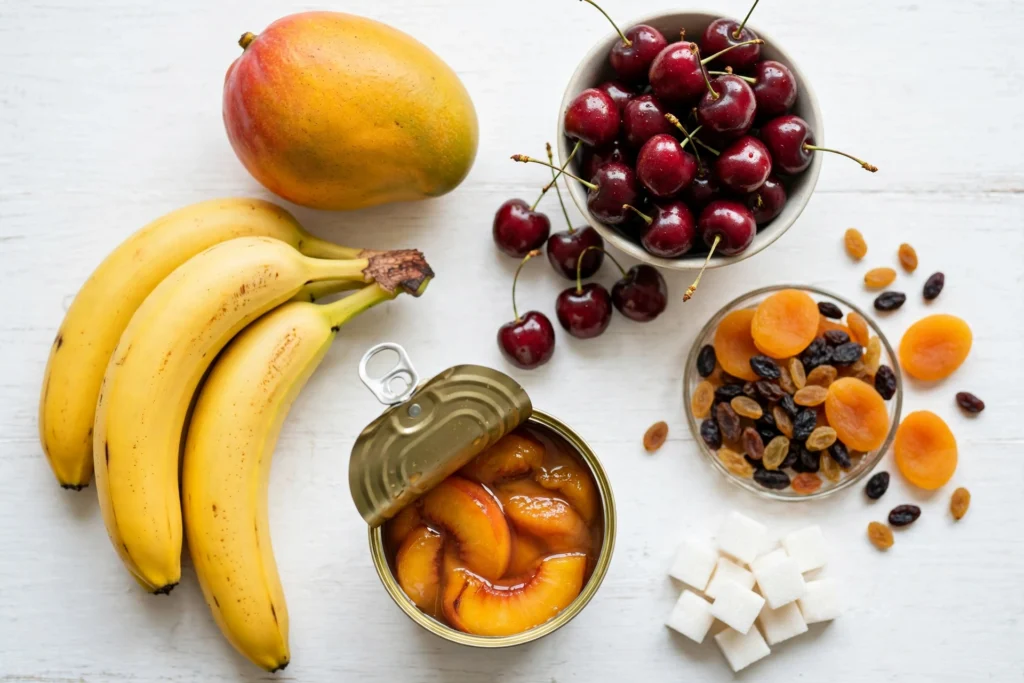
Dried fruits like raisins, dates, and dried mango. This is the biggest trap of all. Fresh grapes are mostly water, but raisins are grapes with the water removed and the sugar concentrated. A small 1.5 ounce box of raisins has about 130 calories and 25 grams of sugar, and it disappears in six bites. One cup of dried mango can pass 300 calories. Dates are similar, with about 67 calories and 18 grams of sugar in a single Medjool date. Trail mix built on dried fruit is closer to candy than to a diet snack.
Mango. A ripe mango is delicious, and that is exactly the problem. One whole mango has roughly 200 calories and 46 grams of sugar. Most people eat the whole fruit without thinking, especially in smoothies where two mangoes vanish into one glass. If you love mango, eat half and pair it with Greek yogurt so the protein slows the sugar down.
Very ripe bananas. Bananas are not villains, but ripeness changes them. A firm yellow banana has more resistant starch and a gentler effect on blood sugar. As the peel turns brown and spotty, the starch converts to sugar and the glycemic impact climbs. A medium banana has about 105 calories and 14 grams of sugar. One a day is fine for most people, but three ripe bananas blended into a smoothie is a sugar bomb.
Cherries in large amounts. Cherries have real benefits, including compounds that support sleep and recovery. The issue is pure portion math. One cup has about 97 calories and 20 grams of sugar, and cherries are uniquely easy to eat straight from the bag while watching TV. Three cups later, you have eaten nearly 300 calories of a food you barely noticed. Serve cherries in a small bowl, never from the bag.
Canned fruit in syrup. Peaches, pears, and fruit cocktail packed in heavy syrup are fruit plus a sugar bath. One cup of canned peaches in syrup has around 160 calories and up to 35 grams of sugar, much of it added. The fruit itself is not the issue here. The syrup is. If you buy canned fruit, choose the version packed in water or its own juice and drain it well.
Better Swaps to Eat Instead
Here is the good news. For every fruit on the avoid list, there is a swap that gives you the same sweet satisfaction for a fraction of the sugar. And to be clear, choosing better swaps is how most people actually succeed with the 5 fruits to avoid for weight loss, because willpower alone rarely survives a stocked kitchen.
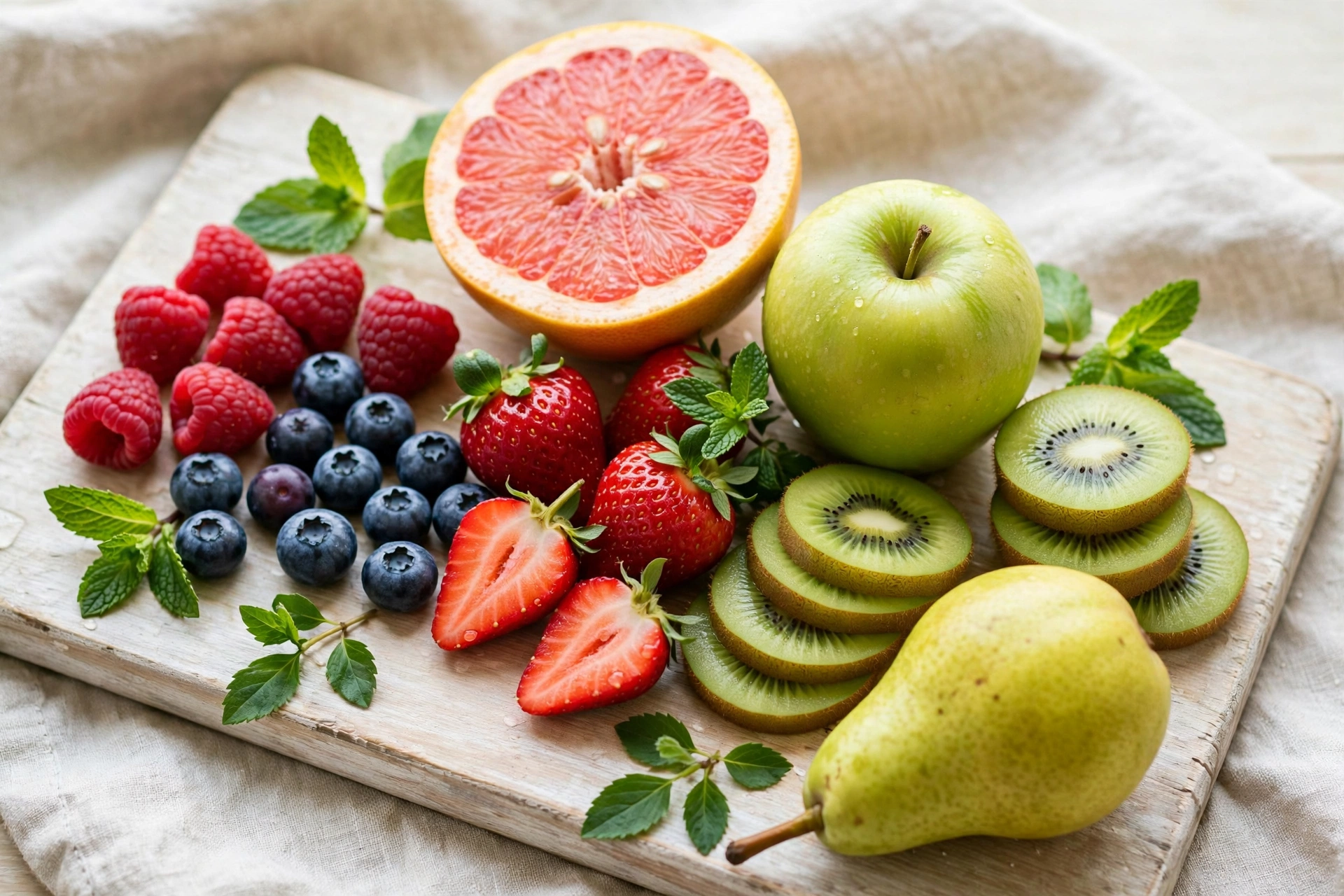
Berries are the champions. A full cup of strawberries has about 49 calories and 7 grams of sugar, with fiber that keeps you full. Blueberries and raspberries are slightly higher but still excellent. Berries also work frozen, which makes them cheap and available all year.
Grapefruit is the classic diet fruit for a reason. Half a grapefruit has about 52 calories, real fiber, and a tart flavor that naturally slows your eating. Studies link regular grapefruit eating with modest weight loss support, likely because it replaces sweeter options.
Apples and pears win on fiber. A medium apple has about 95 calories and 4 grams of fiber, and the chewing itself signals fullness to your brain. Pears go even higher, with about 6 grams of fiber each. Eat the peel, because much of the fiber lives there.
Kiwi is the underrated pick. Two kiwis have about 84 calories, lots of vitamin C, and a sweet tart taste that satisfies dessert cravings. Kiwi also supports digestion, which helps you feel lighter overall.
How to Enjoy Fruit Without Slowing Your Progress
You do not need a fruit ban. You need a fruit system. Keep these simple habits and fruit becomes an ally again.
Eat fruit whole, never juiced. Juice removes the fiber that makes fruit filling. An orange is a snack. Orange juice is a sugar drink with a health halo.
Pair fruit with protein. Fruit alone digests fast and hunger returns quickly. Fruit with Greek yogurt, cottage cheese, or a few nuts keeps you full two to three times longer.
Watch portions of sweet fruits. For mango, banana, and cherries, treat half a cup to one cup as a serving and stop there. Pre portion into a bowl instead of eating from the container.
Time fruit around activity. Fruit before or after a workout gives your body somewhere useful to send the sugar. Fruit at 11 PM in front of the TV has nowhere to go.
Read canned and dried labels. If sugar, syrup, or juice concentrate appears in the first ingredients, put it back. Your future self will thank you.
FAQs
Are bananas really bad for weight loss?
No. Bananas are a reasonable food with real nutrients. The caution is about ripeness and quantity. One firm banana a day fits almost any diet. The problem is multiple very ripe bananas, especially blended into smoothies where portions disappear.
Can I eat mango while trying to lose weight?
Yes, in a controlled portion. Half a mango paired with protein like Greek yogurt is a smart treat. The whole mango every day, or mango smoothies with two fruits, is where the sugar and calories quietly add up.
Is dried fruit worse than candy?
Nutritionally dried fruit still has fiber and minerals, so it beats candy. But for weight loss it behaves a lot like candy, because it is calorie dense and very easy to overeat. Treat raisins and dates like a condiment, not a snack base.
What is the best fruit for weight loss overall?
Berries are the strongest all round choice, especially strawberries and raspberries. They combine low sugar, high fiber, and large volume, so a satisfying bowl costs very few calories. Grapefruit and apples are close behind.
Should I avoid fruit completely on a diet?
No. Cutting fruit entirely removes fiber, vitamins, and one of the most satisfying sweet foods available to you. The goal is smarter fruit choices and controlled portions of the sweetest ones, not fear of fruit.
Conclusion
Fruit is not the enemy of weight loss, but the sweetest and most concentrated forms can quietly stall your progress. Keep the 5 fruits to avoid for weight loss in the rare treat category, build your daily habit around berries, apples, grapefruit, and kiwi, and always pair fruit with protein when you can. Small swaps like these protect your calorie deficit without making your diet feel like a punishment, and that is exactly the kind of change you can keep for good.