
You can improve your mental wellness naturally by meditating 10 minutes daily, eating a brain-friendly diet omega-3s whole foods less sugar exercising 30 minutes most days sleeping 7–9 hours, staying socially connected, practicing gratitude, and limiting screen time. Small daily habits beat occasional big efforts consistency matters more than perfection.
Key Takeaways
- Meditation: Just 10 minutes a day reduces stress and improves focus
- Nutrition: Omega-3s, whole foods, and stable blood sugar support mood
- Exercise: 30 minutes of movement works like a natural antidepressant
- Sleep: 7–9 hours is non-negotiable for emotional balance
- Connection: Strong relationships protect mental health more than any supplement
- Gratitude: Writing 3 good things daily rewires your brain toward positivity
- Screens: Less doomscrolling = less anxiety, better sleep
What Is Mental Wellness, Really
Mental wellness is not just the absence of mental illness it’s your ability to handle stress, build relationships, make decisions, and enjoy life. Think of it like physical fitness you don’t get fit by going to the gym once. You build it with small, repeated daily habits. The good news? Every strategy below is free, natural, and backed by research.
7 Proven Ways How Can You Improve Your Mental Wellness Naturally
1. Practice Mindful Meditation 10 Minutes a Day
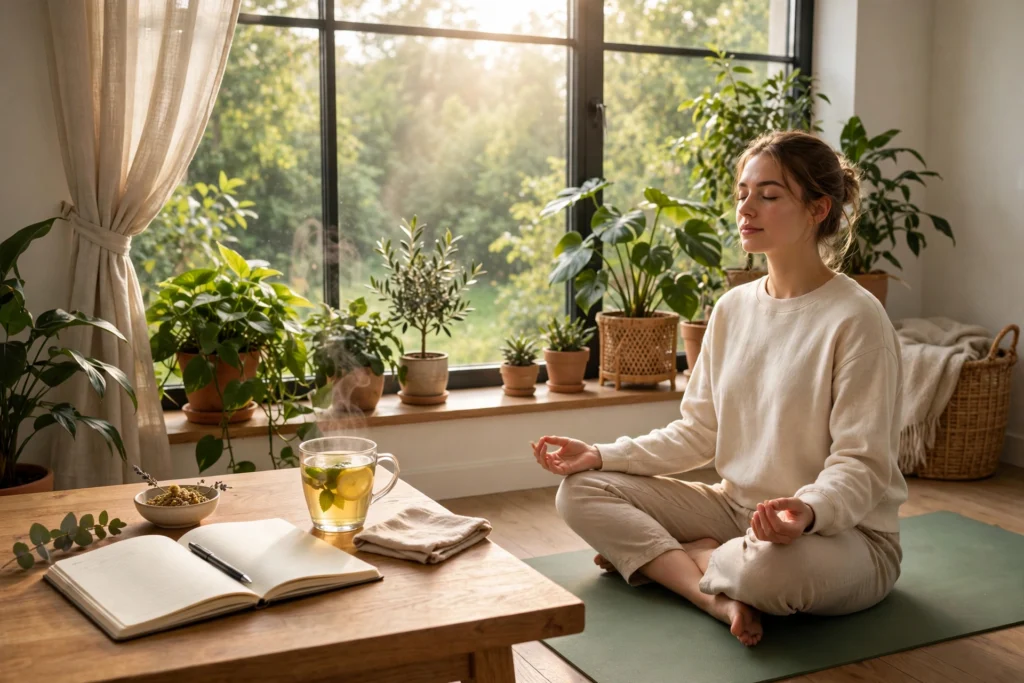
Engage in mindful meditation to cultivate inner peace and mental clarity. Find a quiet space, sit comfortably, close your eyes, and focus on your breath. Take slow, deep breaths inhale for 4 counts, hold for 4, exhale for 6. When thoughts wander they will gently return your attention to your breath without judging yourself.
Research shows even 10 minutes of daily meditation lowers cortisol (the stress hormone), reduces anxiety, and improves focus within 2 weeks. Start with just 5 minutes if 10 feels long. Apps, guided videos, or simply sitting quietly all work the habit matters more than the method.
2. Eat a Brain-Friendly Diet Holistic Nutrition
What you eat directly affects how you feel. Your brain uses 20% of your body’s energy, so it needs quality fuel. Prioritize whole foods fruits, vegetables, whole grains, lean proteins, and healthy fats and limit ultra-processed foods, excess sugar, and alcohol.
Key brain foods:
- Omega-3 fatty acids (salmon, chia seeds, walnuts) linked to improved mood and cognitive function
- Berries and leafy greens antioxidants that reduce brain inflammation linked to depression
- Complex carbs (sweet potatoes, quinoa, oats) stable blood sugar means stable mood and energy
- Fermented foods (yogurt, kefir, kimchi) support the gut-brain axis, which influences mental health
Avoiding excessive caffeine and sugar prevents energy crashes and mood swings. Certain plant-based supplements also target the brain-ear connection for example, EchoXen hearing support drops use natural extracts to support hearing clarity and mental focus. For a full breakdown of the most useful supplements, see our guide to top supplements for wellness and longevity.
3. Exercise Regularly The Natural Antidepressant
Regular physical exercise is one of the most powerful natural tools for mental wellness. When you move, your body releases endorphins natural mood elevators and reduces stress hormones. Studies show 30 minutes of moderate exercise brisk walking, jogging, swimming, yoga 4–5 times a week reduces symptoms of anxiety and depression as effectively as medication for mild cases.
Exercise also improves sleep, self-esteem, and cognitive function. If you’re overwhelmed, a 10-minute walk is a better coping tool than scrolling your phone. Start small: a daily walk around the block beats a gym membership you never use.
4. Prioritize Quality Sleep 7–9 Hours
Sleep is the foundation of mental wellness. When you consistently sleep less than 7 hours, stress, anxiety, and irritability rise, and concentration falls. During deep sleep, your brain processes emotions, consolidates memories, and regulates hormones essential for emotional balance.
Build a sleep routine:
- Same bedtime and wake time every day (even weekends)
- No screens 1 hour before bed — blue light blocks melatonin
- Cool, dark, quiet bedroom
- Wind down with reading, stretching, or meditation instead of news
Prioritizing rest isn’t a luxury it’s a necessity for optimal mental wellness.
5. Stay Socially Connected
Humans are wired for connection. Loneliness is as harmful to health as smoking 15 cigarettes a day, according to research. Strong relationships buffer stress, improve resilience, and even extend lifespan.
You don’t need a huge social circle 2–3 close relationships are enough. Call a friend, eat a meal with family, join a class or community group. If you’re struggling, talking to someone a friend, counselor, or support group is a sign of strength, not weakness.
6. Practice Gratitude and Journaling
Gratitude literally rewires your brain. Writing down 3 good things each day even small ones like good coffee or sunny walk trains your brain to notice positives instead of threats. Within weeks, people report better mood, better sleep, and lower stress.
Try this: every night, write 3 things that went well today and why. Keep it simple. A paper notebook works better than an app fewer distractions.
7. Detox from Screens and Spend Time in Nature
The average person checks their phone 96 times a day. Constant notifications, news, and social media comparison fuel anxiety and fragment attention. Try a daily digital sunset: no screens 1 hour before bed, and one phone-free hour on weekends.
Replace some screen time with nature a walk in a park, gardening, or simply sitting outside. Studies show even 20 minutes in nature lowers stress hormones and improves mood. Sunlight also regulates your body clock, which improves sleep.
What to Avoid for Better Mental Wellness
- Excessive alcohol — a depressant that disrupts sleep and worsens anxiety
- Doomscrolling — constant negative news trains your brain to expect threats
- Social isolation — withdrawing when stressed makes things worse, not better
- Skipping sleep — pulling all-nighters destroys emotional regulation
- Comparing yourself on social media — everyone posts highlights, not reality
- Bottling up emotions — unexpressed stress builds up; talk, write, or seek help
FAQs
How can I improve my mental wellness naturally at home?
Start with the basics: meditate 10 minutes daily, eat whole foods, walk 30 minutes, sleep 7–9 hours, and limit screen time. These five habits alone improve mental wellness for most people within 2–4 weeks. Add gratitude journaling and social connection for even better results.
What is the fastest way to improve mental health naturally?
Exercise is the fastest natural mood booster a single 30-minute walk can improve mood within hours. For lasting change, combine daily movement with good sleep and reduced screen time. There is no overnight fix, but most people feel noticeably better within 2 weeks of consistent habits.
Does diet really affect mental health?
Yes. Research consistently links diet quality to mental health. Diets high in ultra-processed foods, sugar, and alcohol increase depression risk, while Mediterranean-style diets vegetables, fish, olive oil, whole grains are linked to lower rates of depression and anxiety. Your gut and brain are directly connected through the gut-brain axis.
Can meditation replace therapy or medication?
Meditation is a powerful support tool, but it is not a replacement for professional treatment. If you have persistent depression, anxiety, panic attacks, or thoughts of harming yourself, please seek professional help. Natural strategies work best alongside not instead of proper care when it’s needed.
How long does it take to feel mentally better?
Most people notice small improvements within 1–2 weeks of consistent habits better sleep, calmer mood. Deeper changes stable energy, resilience to stress, lasting positivity typically take 6–8 weeks. Be patient you’re building a skill, not flipping a switch.
Conclusion
Mental wellness is built daily, not found once. You don’t need a perfect routine you need a consistent one. Pick two habits from this list we suggest meditation + a daily walk, do them for two weeks, then add a third. Small steps, repeated daily, compound into a calmer, stronger, happier mind.