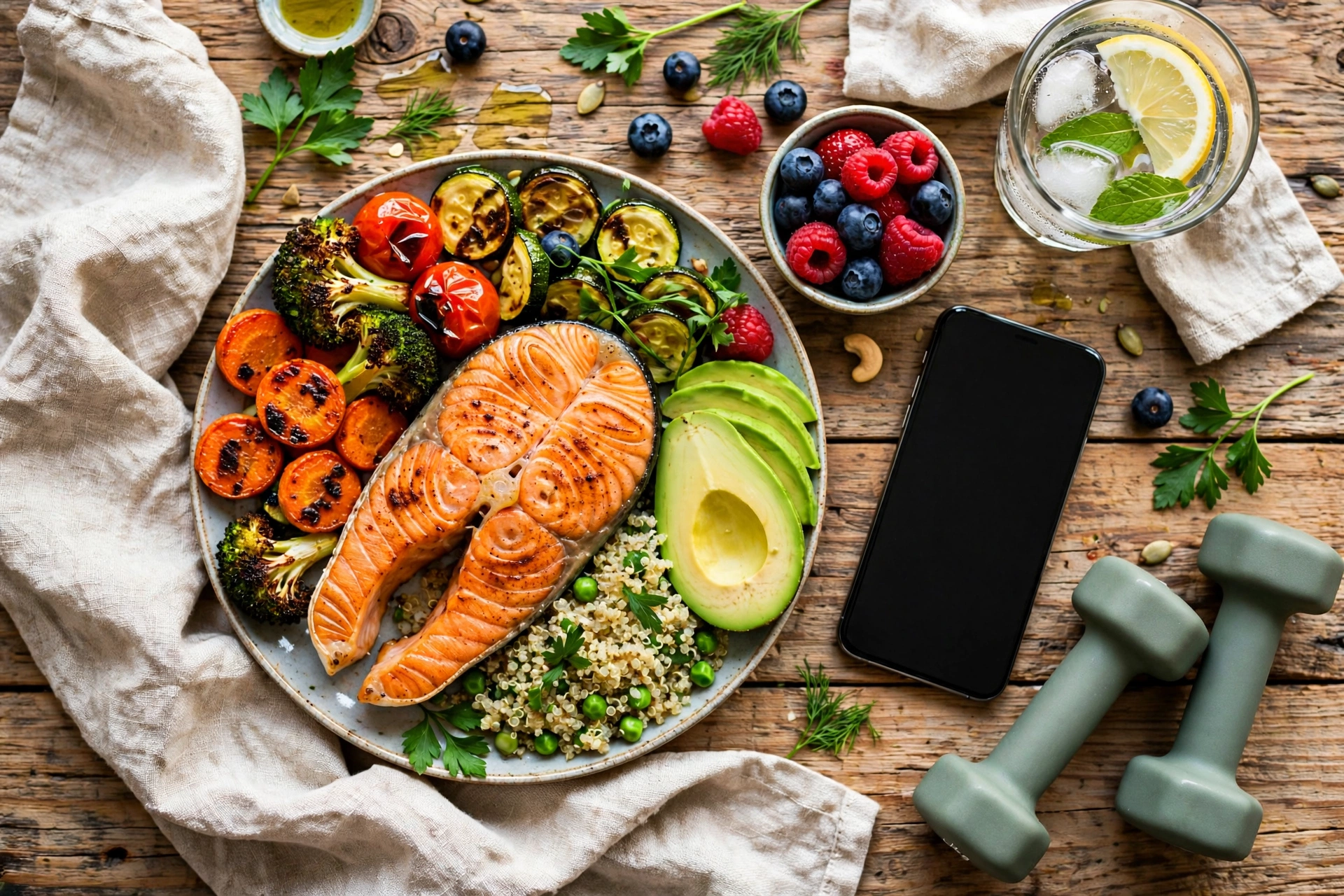
Yes you can lose weight without counting calories. Weight loss comes from a calorie deficit, but you don’t need a food scale or tracking app to create one. The trick is building habits that reduce your calorie intake automatically: eating more protein and fiber-rich foods, drinking water before meals, eating mindfully, sleeping 7–9 hours, and moving more every day. Below are 7 proven strategies that work without a single number tracked How to lose weight without counting calories.
Why Calorie Counting Doesn’t Work for Everyone
Counting every calorie is tedious, time-consuming, and hard to sustain — research shows most people quit tracking within weeks. For some, it can even trigger an unhealthy obsession with food. The good news: it’s the deficit that causes weight loss, not the counting. These habits create that deficit naturally.
7 Proven Ways How to lose weight without counting calories
1. Eat Protein at Every Meal
Protein is the most filling nutrient it keeps you full for hours, burns more calories during digestion than carbs or fat, and protects your muscle while you lose fat. Aim for a palm-sized portion at each meal: eggs, chicken, fish, lentils, Greek yogurt, or tofu. People who raise their protein intake often eat hundreds of fewer calories a day without trying.
2. Fill Half Your Plate with Fiber-Rich Foods
Vegetables, fruits, legumes, and whole grains add volume to your meals with very few calories. Fiber slows digestion, steadies blood sugar, and keeps hunger away far longer than processed foods. A simple rule: make vegetables the biggest thing on your plate, and weight loss gets easier on its own.
3. Drink Water Before Meals
Drinking a large glass of water 20–30 minutes before eating helps you feel fuller and eat less — studies show it can cut meal calorie intake significantly. Swap sugary drinks for water, and you’ve removed hundreds of empty calories without counting a thing.
4. Practice Mindful Eating
Eat slowly, without screens, and stop when you’re about 80% full. It takes roughly 20 minutes for your brain to register fullness — fast eaters consistently overeat before the signal arrives. Putting your fork down between bites and chewing thoroughly are small changes with a big impact. (See also: 10 Proven Weight Loss Tips Backed by Science)
5. Use the Plate Method
No numbers needed: fill half your plate with vegetables, one quarter with lean protein, and one quarter with whole grains or starchy vegetables. This single visual rule controls portions and balances nutrients automatically at every meal.
6. Sleep 7–9 Hours a Night
Poor sleep raises ghrelin (the hunger hormone) and lowers leptin (the fullness hormone) a brutal combination that drives cravings, especially for sugary, high-calorie foods. People who sleep less than 6 hours consistently eat more the next day. Fix your sleep, and your appetite partly fixes itself.
7. Move More Throughout the Day
You don’t need brutal workouts. Aim for 8,000–10,000 steps daily, add 2–3 strength sessions per week to protect muscle, and take short walks after meals. Daily movement quietly burns hundreds of extra calories.
Alternatives to Calorie Counting
If you want structure without numbers, try these:
- Hand portions: a palm of protein, a fist of vegetables, a cupped hand of carbs, a thumb of fats per meal.
- The hunger scale: eat when you’re at a 3–4 out of 10 hunger, stop at 7. It retrains you to trust your body.
- Weekly check-ins weigh yourself once a week and adjust habits far less stressful than daily logging.
Foods That Help You Lose Weight Without Tracking
Keep these staples in your kitchen and weight loss gets easier by default: eggs, leafy greens, chicken and fish, lentils and beans, oats, Greek yogurt, apples and berries, and nuts in small portions. These foods are high in protein or fiber, so they fill you up on fewer calories.
FAQs
Can you really lose weight without counting calories?
Yes. Weight loss requires a calorie deficit, not a calculator. Habits like eating more protein and fiber, drinking water before meals, sleeping well, and walking daily create that deficit naturally many people lose 1–2 pounds per week this way without ever logging a meal.
How to lose weight without dieting or counting calories?
Focus on adding rather than restricting: add protein to every meal, add vegetables to half your plate, add a glass of water before eating, add a daily walk. These additions crowd out excess calories without any sense of dieting.
What are the best alternatives to calorie counting?
The plate method (half vegetables, quarter protein, quarter whole grains), hand-based portion sizes, and the 1–10 hunger scale are the most practical alternatives. Weekly weigh-ins give you feedback without daily tracking stress.
How long does it take to see results without counting calories?
Most people notice changes in 3–4 weeks, with steady loss of about 1–2 pounds per week. Because habit-based weight loss is sustainable, the results tend to last longer than crash diets. If progress stalls after a month,
Conclusion
You don’t need to count every calorie to lose weight you need habits that make overeating difficult. Eat protein and fiber at every meal, drink water before eating, slow down, sleep enough, and move daily. Start with two or three of these strategies this week, and let the deficit take care of itself.